Digital health · Mobile
OKKO Space Academy
A mobile game that hides clinically valid vision tests inside a cosmic adventure — turning months of repetitive amblyopia monitoring into something children genuinely want to come back to, while quietly gathering data clinicians can trust.
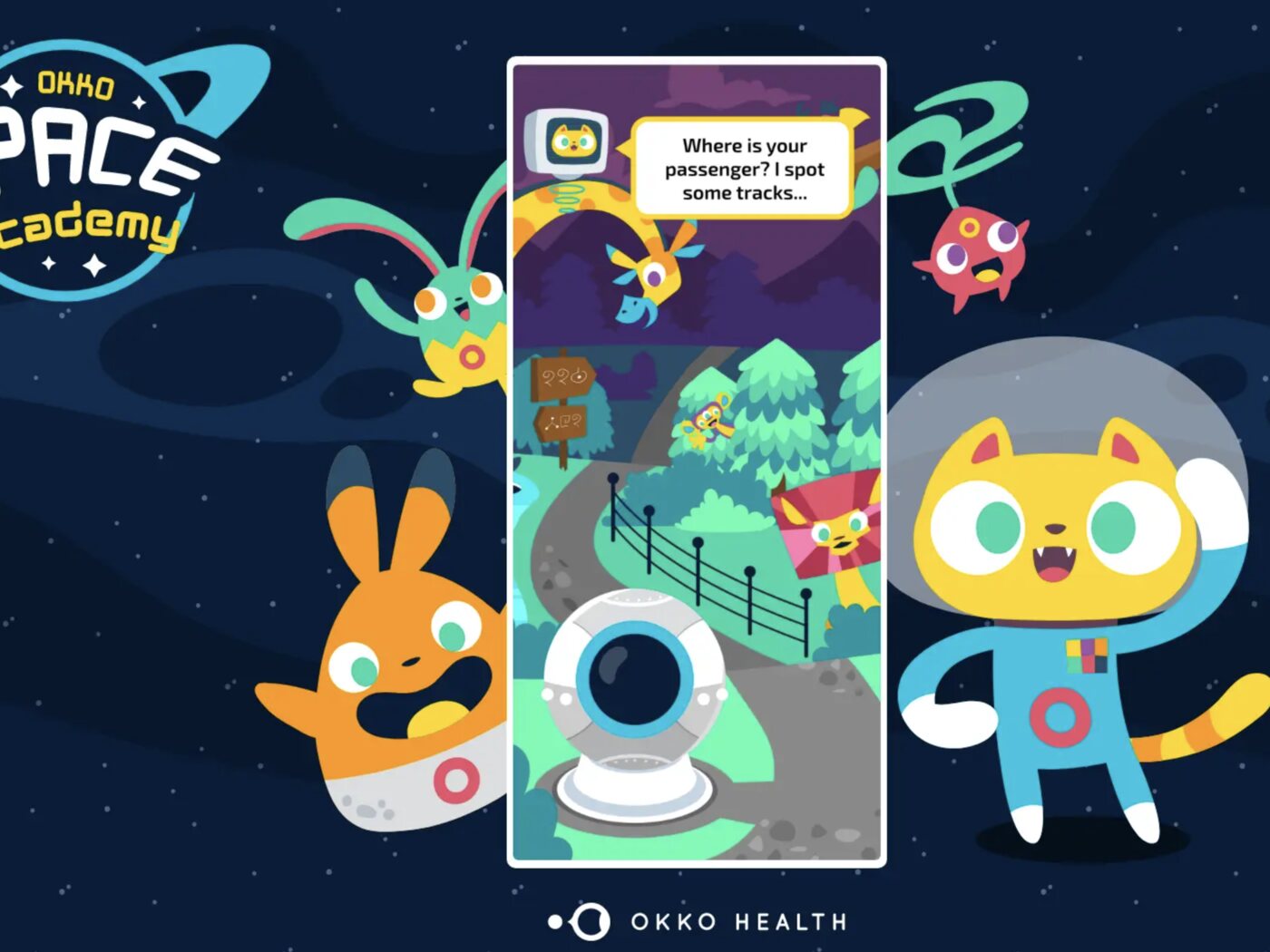
Imagine a six-year-old asked to do vision exercises with an eye patch at home for months on end to treat amblyopia. In many cases those exercises feel repetitive, boring, even traumatic — which makes it hard for parents and clinicians to gather reliable data. OKKO Space Academy was born out of that challenge: to create a child-friendly app that embeds clinically valid vision assessments into engaging, game-like experiences.
The big question was simple to state and hard to solve: how do you hold a young child's interest over several weeks — or even months — while still capturing meaningful clinical data?
I was commissioned to lead this new game following my earlier work with OKKO Health, funded by a £250k Innovate UK grant, to seamlessly integrate vision-science mechanics with rich gameplay. The result is a rich storyline with customisable characters and engaging mini-games designed purely for fun — transforming a traditionally tedious process into an exciting, replayable experience that also gathers dependable clinical metrics.
My contribution
As Project Manager and UX design lead I guided both the creative vision and day-to-day operations: translating clinical requirements into fun, narrative-driven game loops; managing cross-functional teams of developers, artists and clinicians and keeping them aligned on deadlines and funding milestones; and leading the research programme — especially weekly remote playtesting with children — to keep every decision centred on their behaviours and feedback. Tools across the project included ClickUp, Adobe XD, Miro and Slack.
Design process
Every year thousands of children diagnosed with amblyopia face ongoing vision monitoring — often at home, and without the fun or variety that keeps them motivated. OKKO Space Academy set out to change that by blending clinically valid tests into an imaginative game world. But a one-size-fits-all approach was never an option. The process ran from understanding our users and their problems through to iteratively crafting a user-centred solution — much of it during the constraints of COVID-19.
1 · Empathise — exploring the human side of amblyopia care
Three groups sat at the heart of the problem, each with distinct needs and frustrations.
Children with amblyopia (ages 4–8)
Imagine being four and told to repeat the same eye test, day after day. The novelty fades fast and it soon feels like a chore. For children in amblyopia treatment — especially those wearing eye patches — every session is a test of patience. Younger kids lean on parents to guide them; older children want challenges that don't feel "babyish." The real hurdle is striking a balance between fun and focus, so children don't just return each day but actually want to engage.
Clinicians & orthoptists
Behind every paediatric patient is a clinician tracking progress and adjusting treatment. Orthoptists juggle many patients with varying impairment and need accurate visual-acuity data — yet they can't always rely on frequent hospital visits. Their days revolve around scrutinising results, refining patch schedules and ensuring each child gets attention, so they're eager for remote tools that deliver reliable metrics without tying up limited clinic resources.
Parents
Picture a parent balancing work calls, school pickups, dinner and bedtime. Adding a home eye test to that list is daunting. They want something simple to set up and genuinely engaging for their child — something that doesn't become a daily battle. Their goal is to see their child progress while still smiling, merging health with happiness in a way that feels less like a doctor's visit and more like family playtime.
Embarking on a journey of discovery
To understand these perspectives I ran a variety of research activities, each revealing new facets of the amblyopia experience.
- Literature review & best practices — immersing myself in serious-game design frameworks and motivational theories such as PENS, Self-Determination Theory and Flow Theory. Existing paediatric health-game case studies highlighted what makes educational gaming stick: clear goals, feedback loops and adaptive difficulty.
- Interviews & observations — conversations with orthoptists and clinicians clarified requirements around distance measurement, device calibration and data reliability. Parents recounted the daily reality of balancing patching with a busy household, while children told us what makes games feel "fun" or "boring." Watching them play at home underscored small but vital details — intuitive controls and clear visual cues.
- Health-tech networking — at GDC San Francisco I connected with professionals leading healthcare-focused game design. Those conversations shaped decisions around remote tracking tools such as camera-based distance detection, and ways to weave medical metrics into an entertaining interface.
2 · Define — setting the stage for design
After immersing ourselves in the world of amblyopia care — listening to children, parents and clinicians — we crystallised the core challenge into a single problem statement.
From there, four key requirements defined exactly what the solution had to achieve:
- Long-term engagement. To keep children excited for three months or more, we needed deep narrative, varied mini-games and a reward system robust enough to spark curiosity and bring them back day after day.
- Seamless vision testing. The design had to preserve the core "vanishing optotype" mechanic — the scientific heart of amblyopia testing — without specialised setups or physical markers. Clinically sound, but disguised as pure fun.
- Scalable difficulty. From two-year-olds who rely on a parent's hand to eight-year-olds who demand real challenges, the experience had to flex across a wide age range so no child felt overwhelmed or bored.
- User-friendly at home. Busy parents shouldn't wrestle with complex hardware. The game needed to be intuitive enough for children to navigate largely on their own — freeing parents to supervise and cheer them on.
3 · Ideate — imagining a universe worth returning to
In brainstorming we set out to weave clinically valid vision tests into a universe kids couldn't wait to explore — a modular, story-driven experience that fired up their imaginations while still gathering reliable data.
- Modular game structure — mini-games that sneakily test vision using hidden optotypes, sitting alongside purely recreational activities. Children pick from a menu of "space adventures," fuelling a spaceship one day and rescuing cosmic critters the next, keeping every session fresh.
- Deep narrative & characters — building on the Space Academy concept, we kept favourites like Cosmo the Spacecat and dreamed up new, relatable aliens and animals. Each character embodies a real-world experience — caring for pets — with a space twist, like feeding an alien puppy or training a neon lizard to fetch moon rocks.
- Technology upgrades — no more fiddling with fiducial markers or rigid clinic setups. Switching to camera-based distance and eye tracking stripped away bulky equipment, letting kids test their vision from the bedroom or living room with greater accuracy and far less hassle.
Early design explorations
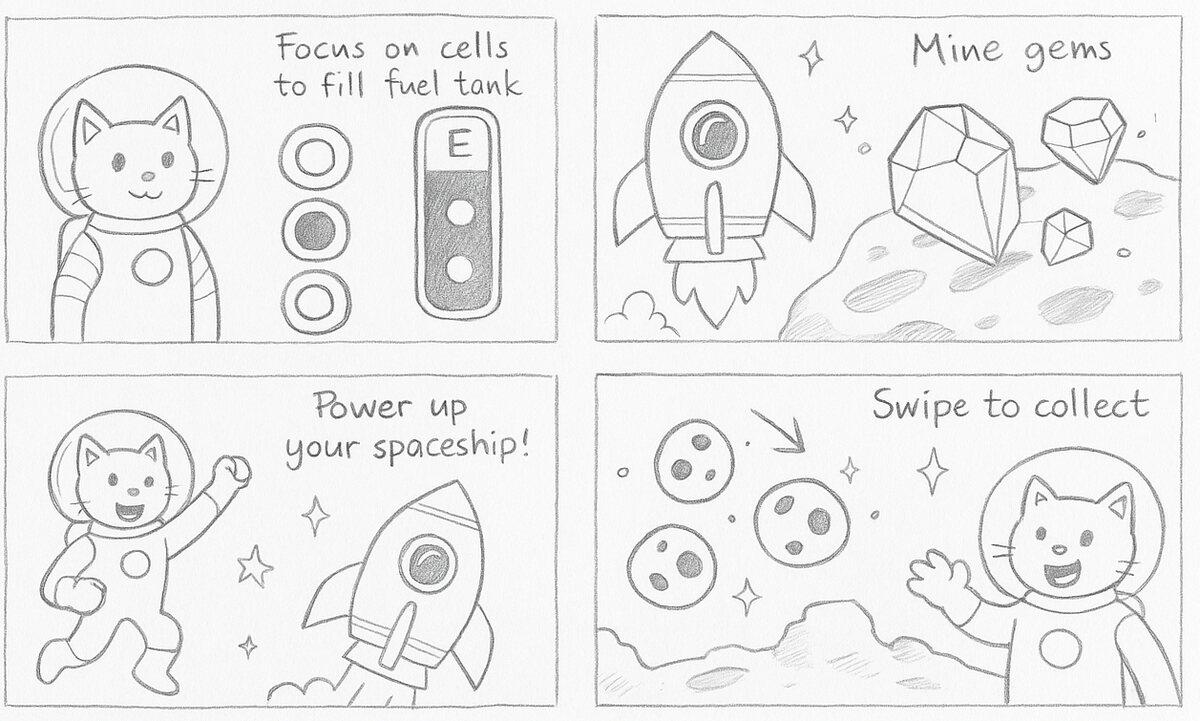
We sketched daily "missions" that disguised vision-science tasks as playful quests. One day children might power up a spaceship by focusing on vanishing optotypes; the next, mine cosmic gems in a swipe-to-collect mini-game — each scenario mapped to a real vision metric and wrapped in galactic wonder.
To ensure broad appeal and replay value we drew on games like Subway Surfers, PJ Masks, Angry Birds, Toca Boca and even older classics like Yeti Sports. These excel at "easy to start, tricky to master" mechanics — exactly the blend of accessibility and challenge we needed for children aged two to eight.
4 · Design — bringing the Space Academy to life
With the vision in place, it was time to fuse clinical accuracy with an irresistible cosmic adventure. Every visual element, interaction and mechanic aimed to strike a balance between fun and function — keeping children engaged while gathering crucial data.
Integrating vanishing optotypes into play
The central design challenge was how to integrate clinically valid vanishing optotype tests without falling into the common trap of "chocolate-covered broccoli" — where medical tasks are simply wrapped in reward animations rather than meaningfully embedded in play. Earlier prototypes, and much of the children's health-game sector, follow that formula: complete a dull testing task, earn unrelated entertainment. We pushed to do something more ambitious — to embed the vision science into the gameplay itself, aligned with the story, tone and mechanics, without compromising clinical integrity.
We reframed the optotypes — the visual targets used to assess acuity — as game-world elements that demanded imagination and interaction:
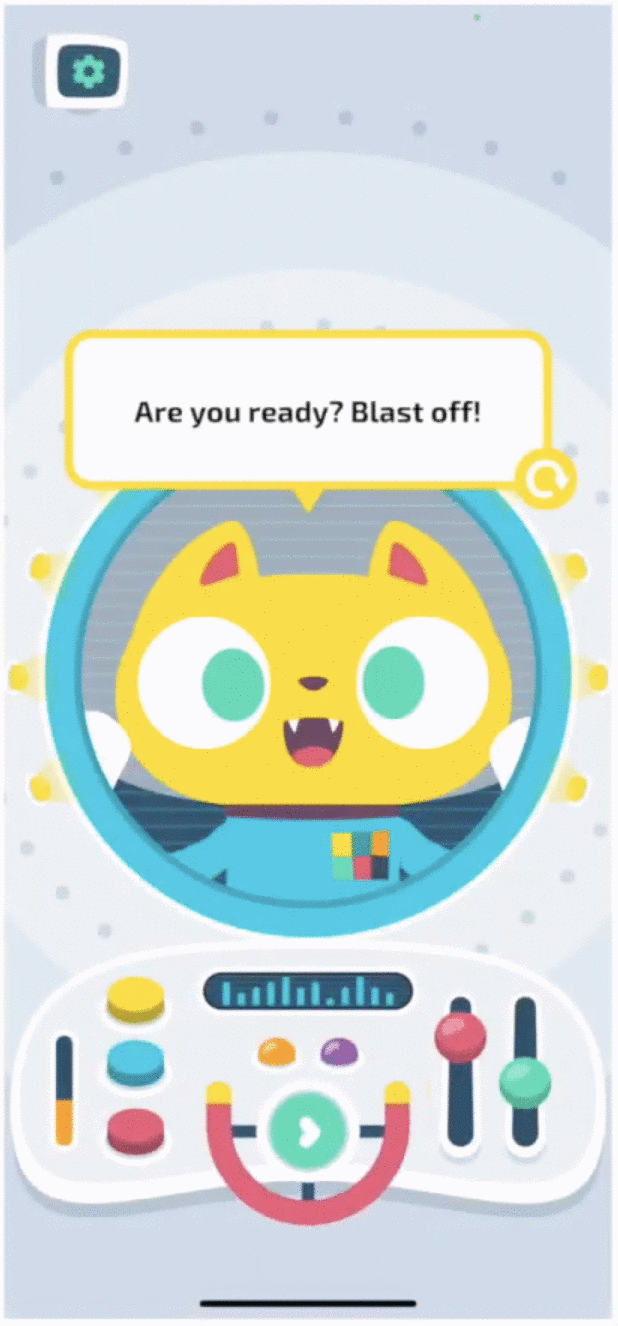
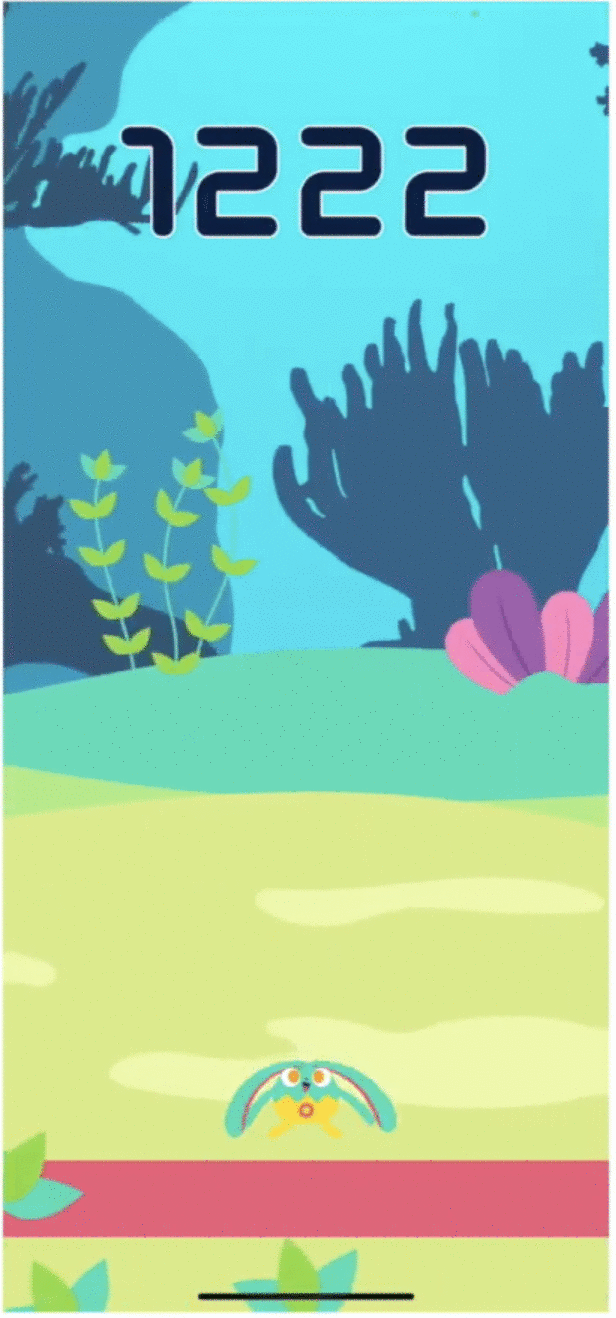
- Bug Splat — space bugs scuttle across the screen and fade into the background.
- Laser Cannon — asteroids drift into view and must be precisely targeted.
- Moon Drilling — moon gems hidden in dust emerge just long enough to mine.
Each loop used optotype fading and positioning in ways that preserved the scientific rigour of the test while transforming it into a purposeful, imaginative challenge. Screen layout, feedback and pacing were carefully tuned to maintain test validity while delivering a feeling of flow and agency. Rather than something to get through to earn a reward, these activities became the reward — the missions cadets were excited to complete.
The eye-patch mechanic: building empathy through play
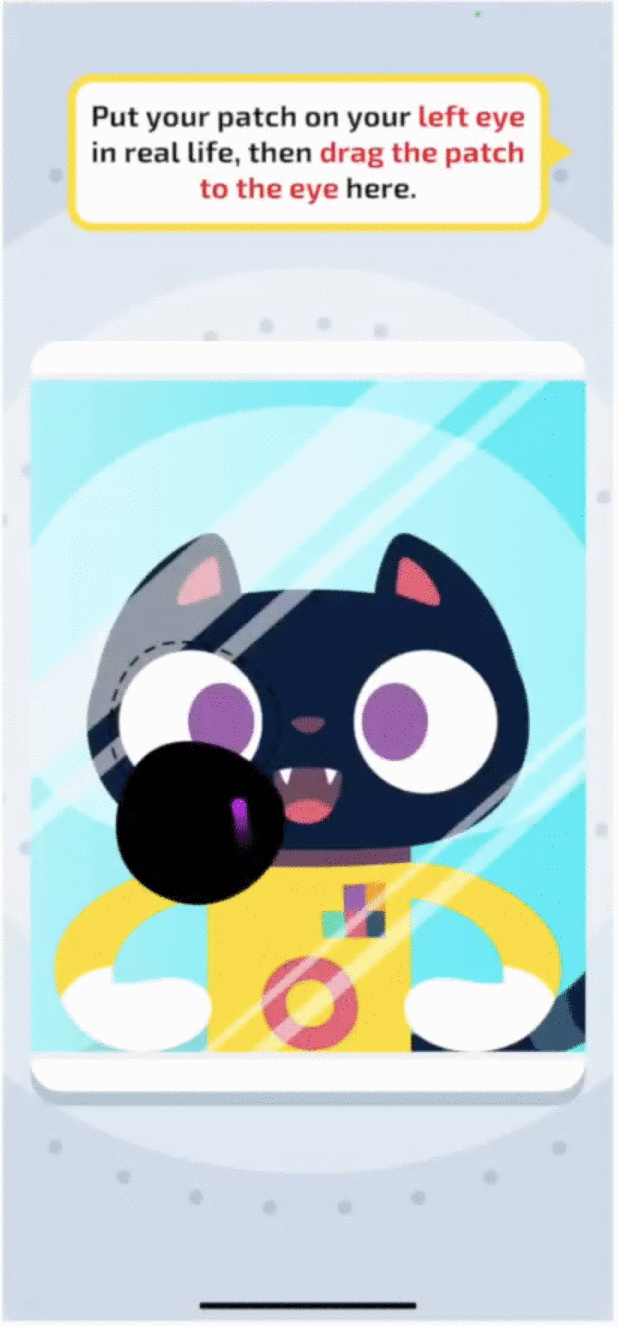
One of the most powerful narrative mechanics was a digital eye patch mirroring the real-world treatment children were undergoing. Rather than avoiding it, we embedded it directly into the story: early on, players place a patch on their customisable character to prepare for a special mission — framed as part of becoming a true cadet, normalising the patch and giving it meaning in the game world.
This simple mechanic did several things at once. It helped children emotionally connect with their character through a sense of shared experience; it reframed the patch not as a medical burden but as a badge of progress, even a heroic one; and it opened up conversations between parents, clinicians and children about why the patch matters — grounded in story, not instruction. By blending this symbolic moment with gameplay we supported not just compliance, but empathy, agency and identity.
Story & characters
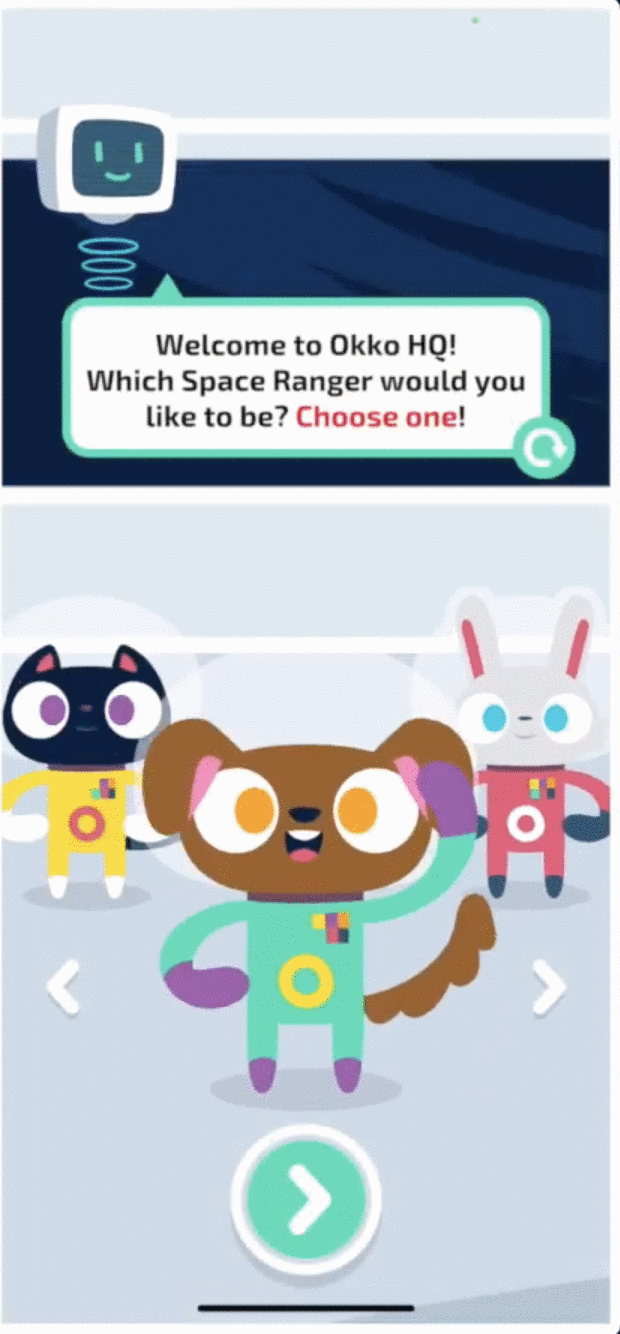
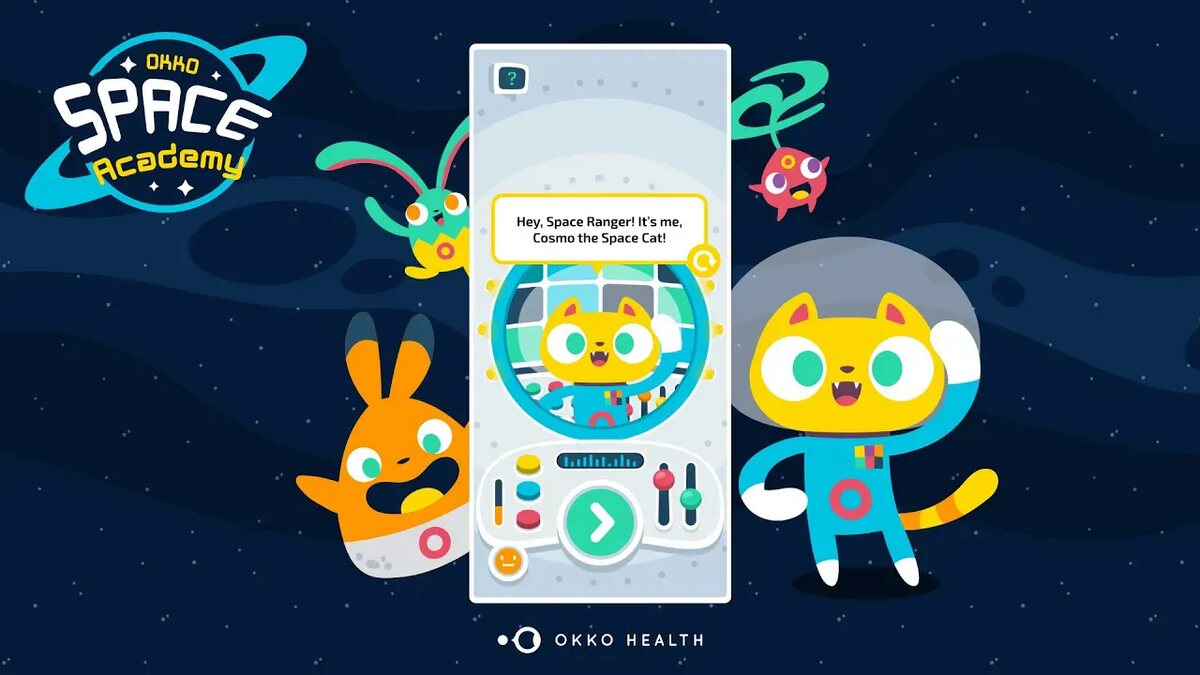
At the heart of the experience is a rich, emotionally grounded narrative. Children join Cosmo the Spacecat and a cast of charming anthropomorphic alien animals at a space-themed training academy, embarking on vision-testing missions and exploratory play across a constellation of imaginative planets.
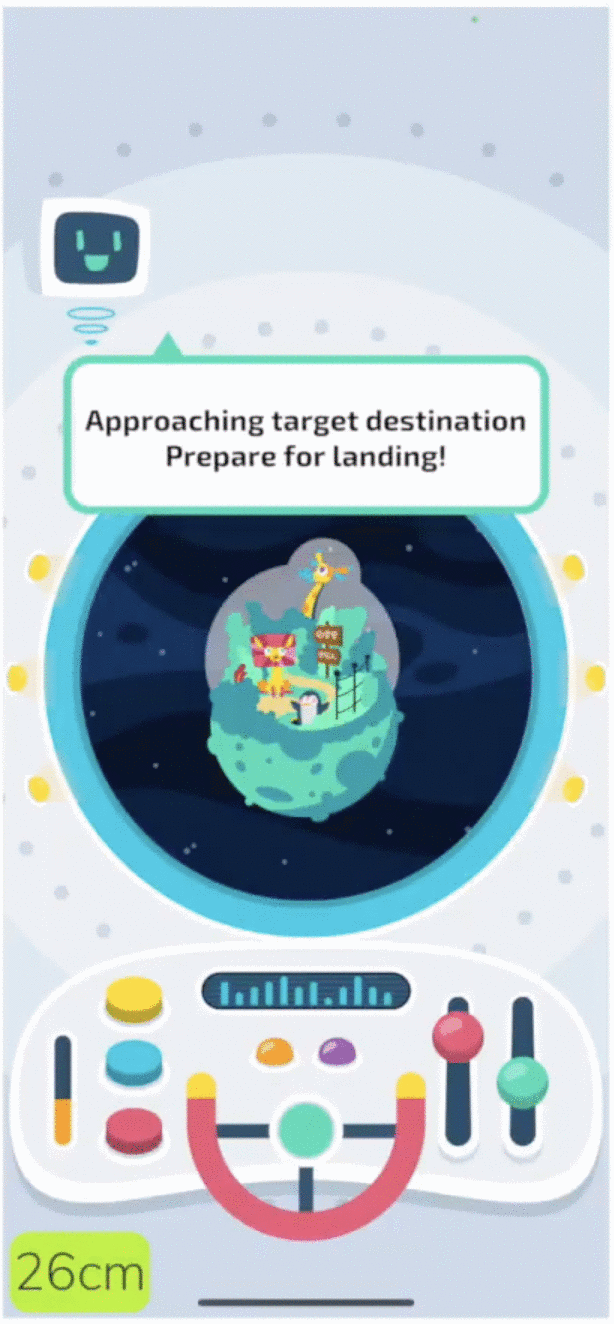
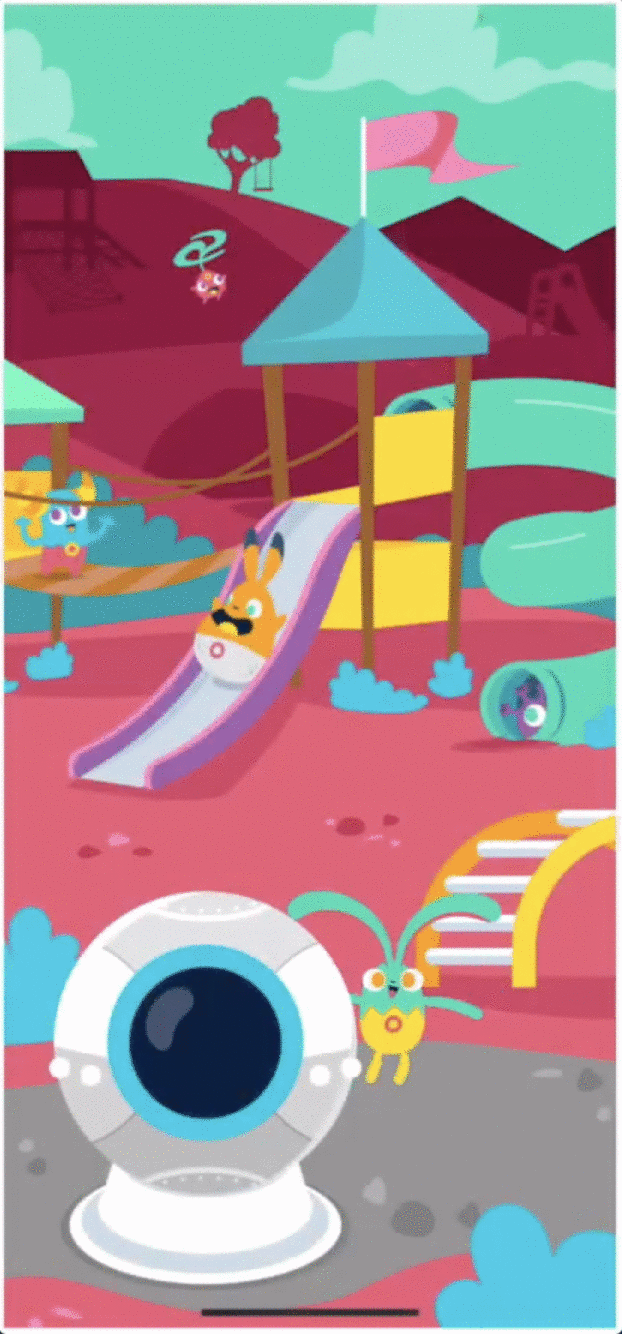
Each planet was inspired by a familiar "life script" setting — the playground, zoo, café or school — reimagined as a cosmic destination and populated with lively characters doing everyday things that mirror a child's real life. On the Playground Planet, players tap to see alien puppies bounce on trampolines or turtles playing catch; on the Zoo Moon, creatures are fed, groomed and walked by friendly alien handlers. Rather than controlling these scenes, children explore them through touch — tapping objects and characters to trigger playful animations, much like Toca Boca games — creating a low-pressure environment that encourages curiosity and joy.
Rewards & progression — motivation through mastery and belonging
We moved away from the traditional external reward model — where players are bribed with flashy animations for completing disconnected medical tasks. Instead, progression was woven into the narrative arc, reinforcing the child's role as a valued member of the academy and sustaining motivation through purpose, mastery and belonging. Completing a vision game wasn't about earning a treat — it advanced the storyline, unlocked new areas of the universe and earned new responsibilities. Players collected loot, badges and personalised ship upgrades not as arbitrary trophies, but as symbols of growing experience and rank.
- Narrative-based unlocks — new planets and characters introduced as part of mission progress, maintaining momentum and anticipation.
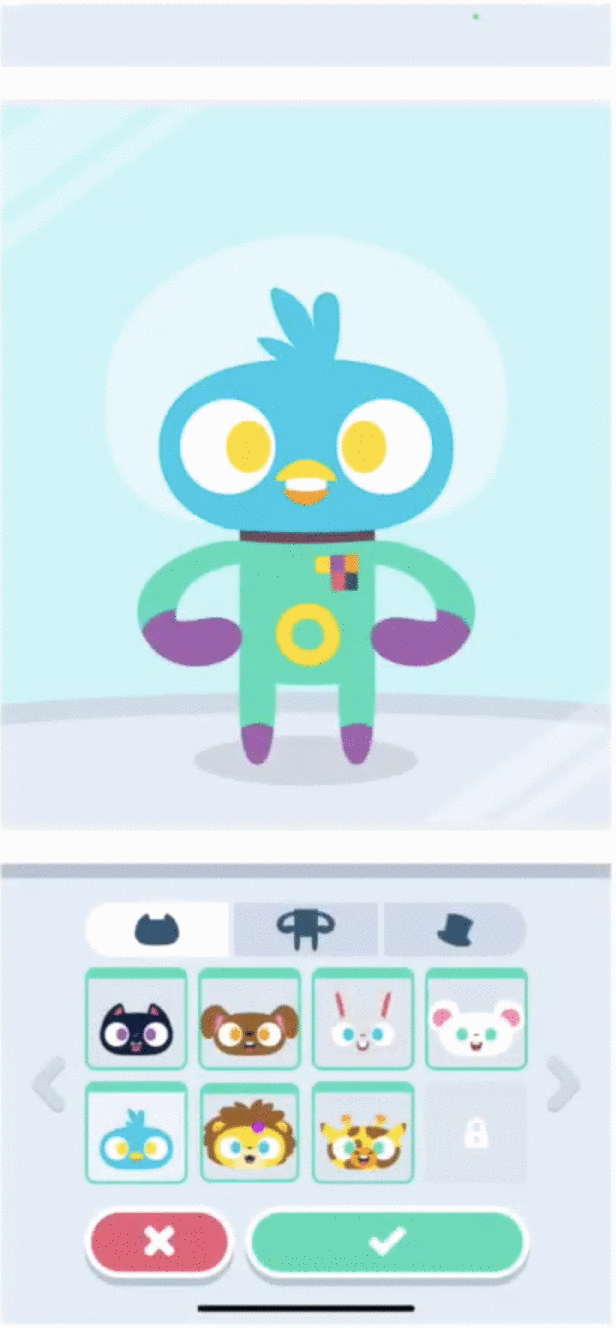
- Cadet personalisation — accessories and outfits for the avatar, reinforcing identity and giving children ownership of their character.
- Exploration incentives — optional interactive zones, animations and side tasks rewarded curiosity and repeat play, without relying on pressure or streaks.
To complement the vision-science tasks we developed a set of purely fun mini-games — memory games, timing challenges and simple dexterity mechanics styled within the OKKO universe and inspired by the likes of Angry Birds and PJ Masks. Interspersed between testing sessions as moments of joy and comic relief, they gave the experience variety and pacing, letting children reset emotionally while staying immersed in the world.
UX flow
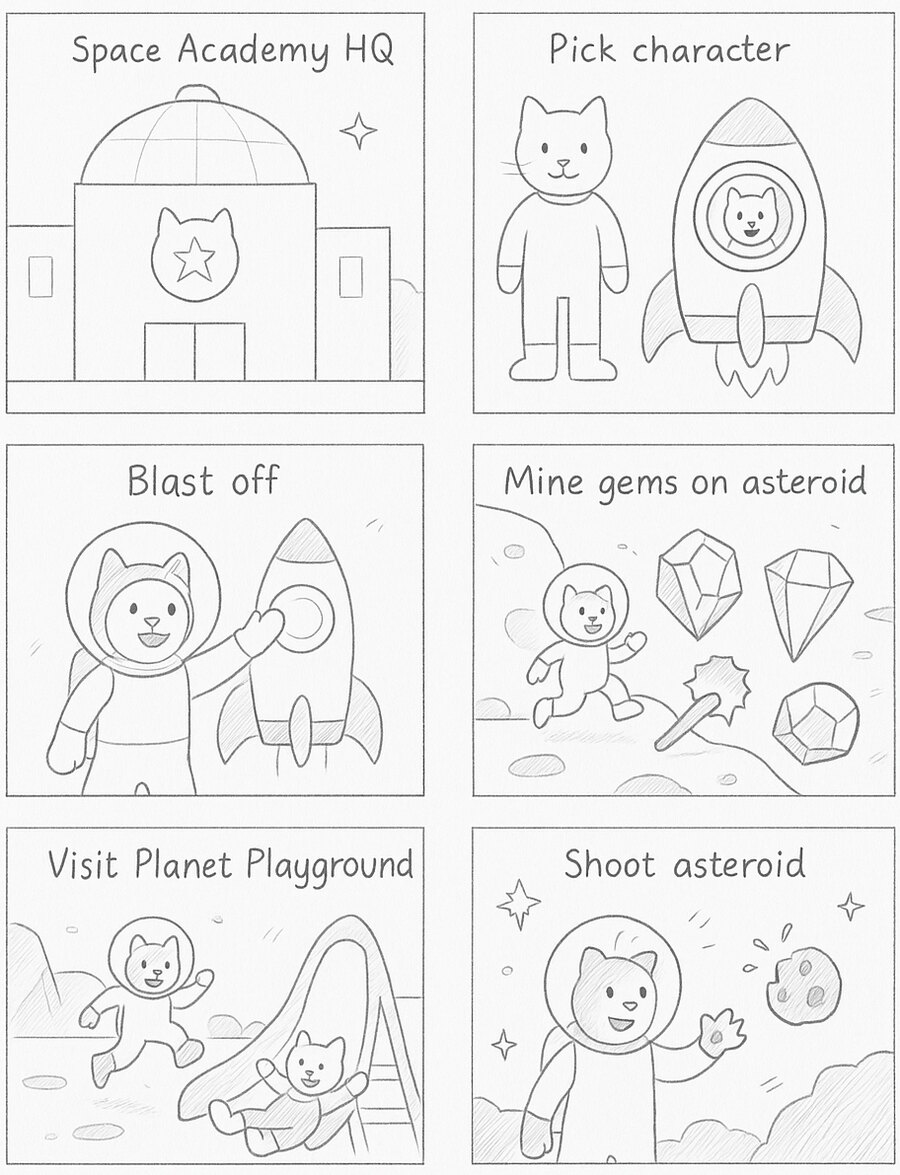
At the centre of everything lies the Academy Hub, where young cadets track progress, pick the day's mission and tailor their avatars. From there they dive into vision-science mini-games (short, clinically oriented activities that capture visual-acuity data), fun-only mini-games (purely entertaining intervals that keep momentum going) and daily/weekly rewards (regular incentives that nudge families toward consistent play and, with it, reliable long-term data). Woven together, these elements create a space-faring journey that feels more like a beloved cartoon adventure than a medical assessment.
5 · Test — designing with aspiring space rangers
The design was shaped through two months of weekly remote playtesting over Zoom, bringing twelve children — aged two to twelve — face to face with our early prototypes. As facilitator I focused on creating a safe, playful, low-pressure environment, guiding children without over-explaining so their natural reactions, hesitations and problem-solving could surface. I recorded behavioural observations, noted breakdowns in attention or navigation, and captured spontaneous comments signalling confusion, excitement or emotional connection. Testing was iterative and highly responsive — each round directly informed refinements, and in some cases children's own ideas made it into the next build.
From the outset it was clear that narrative immersion mattered. Children weren't just playing to win — they were playing to belong, forming attachments to characters, routines and the setting itself.
This led us to expand ambient characters and story-rich interactions, particularly on exploratory planets where children could trigger animations without pressure — breathing room between tasks, grounded in emotionally familiar experiences. The optotype games underwent substantial refinement: our initial designs leaned too far toward either medical repetition or disconnected entertainment, and watching children struggle or disengage helped us strike a better balance.
That told us the vanishing mechanic was being read as a timing challenge, not a visual test — giving us confidence to preserve the fading optotype behaviour while strengthening its narrative framing as bugs, gems or asteroids without disrupting clinical validity. Children also responded warmly to the in-game patch — a moment of role alignment that subtly mirrored their real-life treatment.
We learned that pacing and variety were critical to holding attention across repeated sessions, which validated interleaving vision tasks with purely-fun mini-games — not as bribes, but as part of a holistic rhythm of challenge, release and joy.
Many children began to show emergent routines — returning to favourite characters, navigating planets without instruction and anticipating mission rewards — signalling not just usability but meaningful investment in the world. It was no longer a vision test with a game added; it was their own space academy. They were also eager to contribute creatively, spontaneously offering ideas for new mini-games, character names, alien species and missions. We welcomed it, building several of their ideas — alien creature designs, sound effects and interactive animations — into later versions, reinforcing the child's role as collaborator rather than tester.
What testing taught us
The children told us what worked — not always in words, but through motion, hesitation, attention and play. Their feedback didn't just improve the experience; it ensured the final product was credible, imaginative and emotionally safe, achieving its therapeutic purpose through meaningful, joyful interaction. Above all, therapeutic games for children work best when children help shape them.
Next steps
Following the success of early design and playtesting, the next phase focuses on scaling the platform in partnership with hospital clinics to evaluate real-world effectiveness in supporting amblyopia treatment.
- Clinical deployment within ophthalmology services, integrating the game into routine care to assess its contribution to treatment adherence, engagement with occlusion therapy and vision improvement.
- Formal clinical trials to validate the efficacy of the vanishing-optotype games and ensure they meet the standards required for therapeutic monitoring.
- Iterative refinement of gameplay based on clinical feedback, keeping therapeutic need and user motivation aligned.
In parallel, the platform will continue to grow with new narrative content for long-term use, adaptive mechanics that respond to visual performance and player behaviour, lightweight parent- and clinician-facing insights that don't disrupt the child's experience, and cultural and linguistic localisation to broaden access.
Reflections
Designing OKKO Space Academy was one of the most formative experiences of my career. It required balancing the precision of medical validation with the joy and unpredictability of children's play — without compromising either. This was never about simplifying tasks for a younger audience; it was about meeting children where they are emotionally, cognitively and developmentally, and building a system that respected their intelligence, curiosity and capacity for joy.
Working so closely with children — watching how they played, where they hesitated, what they laughed at and what they ignored — reshaped how I think about usability, engagement and motivation. I learned that emotional safety and delight are not "nice to haves" but essential components of any experience designed to support behaviour over time, and I saw first-hand how young users, given permission, become insightful and creative contributors to design. Ultimately, OKKO reminded me that good design isn't just functional — it's human, hopeful and full of play.
Keep exploring
More case studies
The Sugargotchi
An embodied digital pet to gamify awareness of sugar consumption.
View case study →
Gorilla Game Lab
Digital and tangible playable interfaces to improve the welfare of zoo-housed gorillas.
View case study →
SpaceVision
A participatory, child-centred redesign of a game for diagnosing children's eye disease.
View case study →