Health · Play · Children
The Sugargotchi
An embodied digital pet that gamifies children's awareness of sugar consumption — using computer-vision colour recognition to read oral pH and mirror the impact of free sugars on a child's dental health.
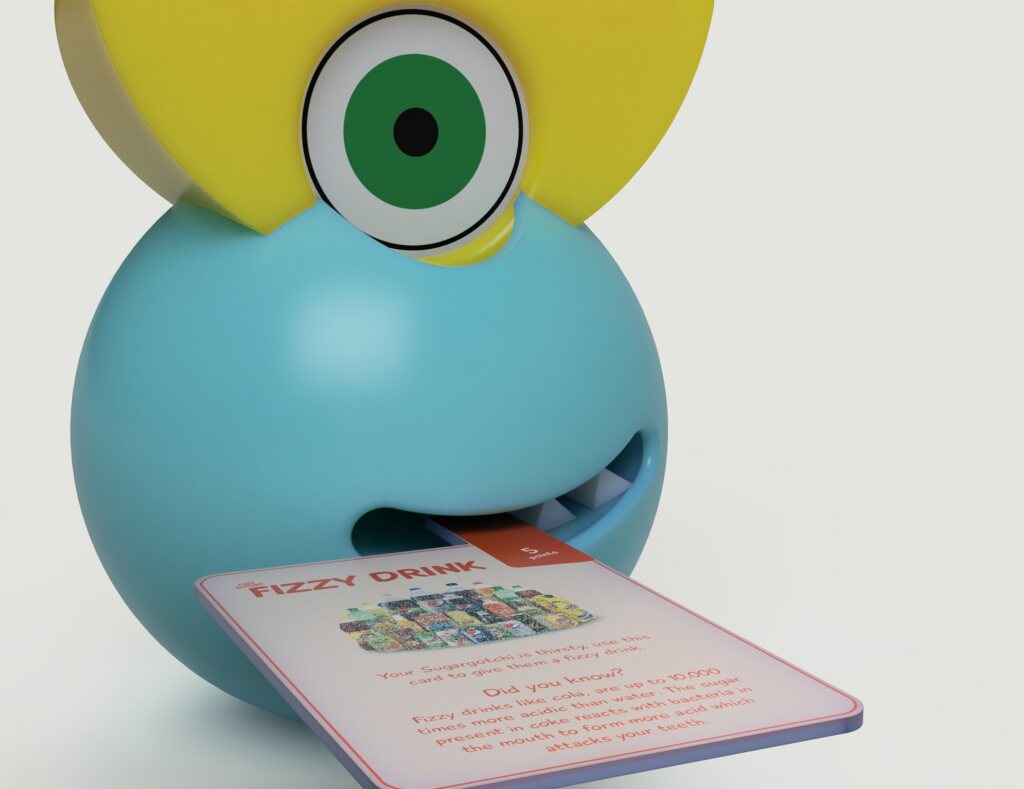
Excessive consumption of free sugars is a critical factor in dental disease among children — one of the most common reasons for hospital admissions in the UK for children aged 5–9. Despite widespread public health campaigns and legislative efforts, children aged 4–10 routinely consume two to three times their recommended daily sugar intake. The consequences include painful tooth extractions, broader systemic health issues, and significant healthcare costs. Parents and children alike struggle to understand how sugar content affects long-term dental health, particularly when weighed against contradictory nutritional claims and relentless child-friendly marketing.
Building on research into serious play for nutritional awareness, Sugargotchi was created as an embodied digital pet to engage children aged 5–10 in understanding their dental health and the impact of free sugars. Using computer-vision colour recognition to track oral pH — a key marker of dental health — the Sugargotchi provided a playful yet educational way to raise awareness and encourage healthier habits. A complementary card game consolidated learning about free sugars through collaborative play, blending gamification, education, and tangible interaction to address a critical public health issue.
My contribution
As project co-lead, I worked with designer Tom Metcalfe to take Sugargotchi from concept to prototype. My contributions included defining the problem space, user requirements, and design principles; leading hardware and software prototyping with Raspberry Pi, OpenCV, and Python; designing and building the tangible interface, including the pH-strip analysis pipeline and Challenge Mode card game; and integrating motivational design principles to support sustained engagement through gamification.
Design process
We developed Sugargotchi through an iterative, user-centred process that combined tangible interaction, playful narrative, and behavioural feedback. Starting with research into sugar education and existing public health tools, we prototyped a digital pet that responded to oral pH levels via computer vision — helping children visualise the impact of free sugars on their dental health. Through cycles of rapid prototyping and playtesting, we refined the character's behaviour, emotional responses, and interface. A complementary card game was co-designed to reinforce learning through collaborative, story-driven play, ensuring the experience was both educational and emotionally engaging.
1 · Understanding the problem space
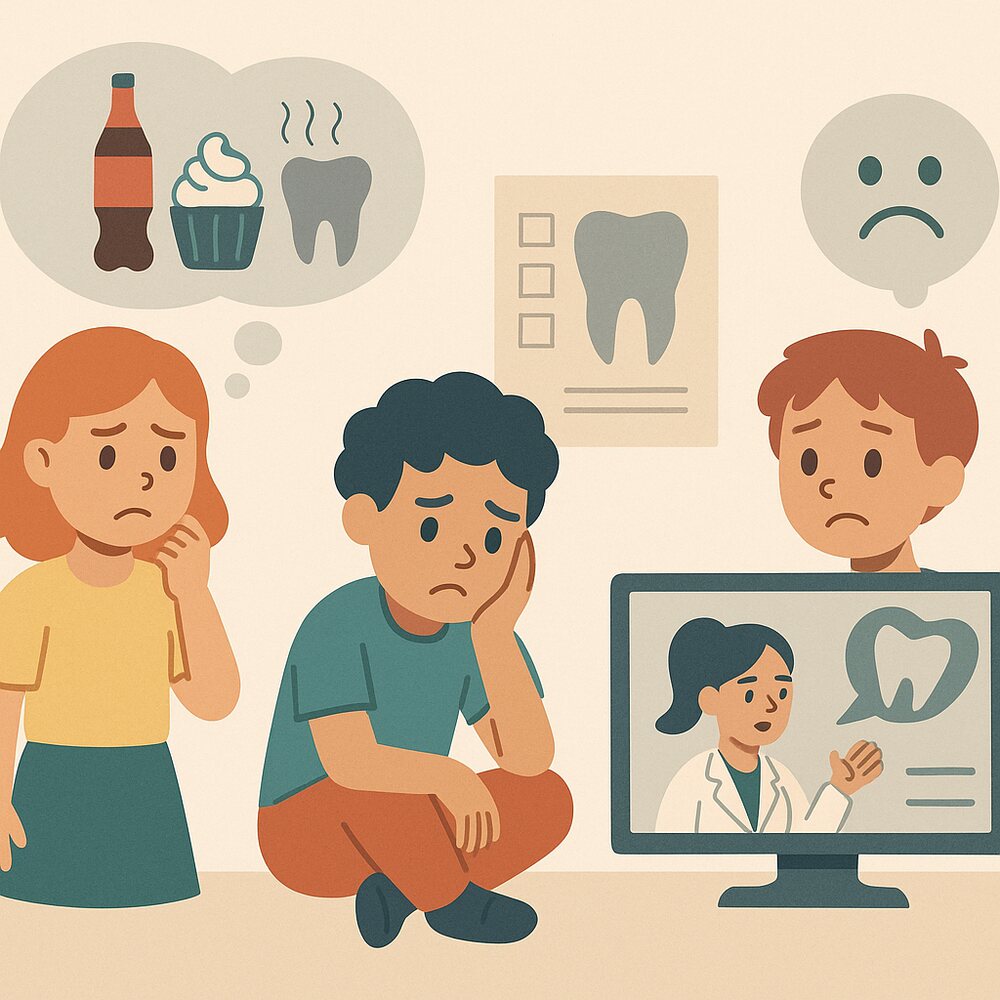
Sugargotchi was conceived to tackle a growing health crisis: the excessive consumption of free sugar among children, which leads to dental disease. The figures are stark — dental issues remain one of the leading causes of childhood hospital admission in the UK, yet despite widespread campaigns children continue to consume far beyond the recommended intake. The downstream effects ripple from painful extractions through to systemic health complications and avoidable costs to the health service.
Identifying the gaps in current approaches
Traditional public health campaigns often rely on broad educational materials, but these lack the emotional engagement necessary to inspire long-term behavioural change in children. Three challenges stood out:
- Lack of awareness — children often don't understand how their diet impacts their oral and systemic health.
- Poor habit formation — educational tools frequently fail to provide the reinforcement needed to develop and sustain healthy habits, such as reducing sugar and maintaining consistent oral hygiene.
- Emotional disconnect — campaigns lack the emotional appeal required to make health education meaningful and memorable for young audiences.
The potential of digital pets for behaviour change
Research into digital interventions highlighted the potential of embodied digital companions — virtual pets — to inspire habit change. Drawing on the Tamagotchi effect, we hypothesised that children would develop an emotional attachment to a digital pet that motivated them to care for it, and that the pet could serve as a proxy for health education — using its state of "health" to mirror the child's actions and reinforce positive behaviours.
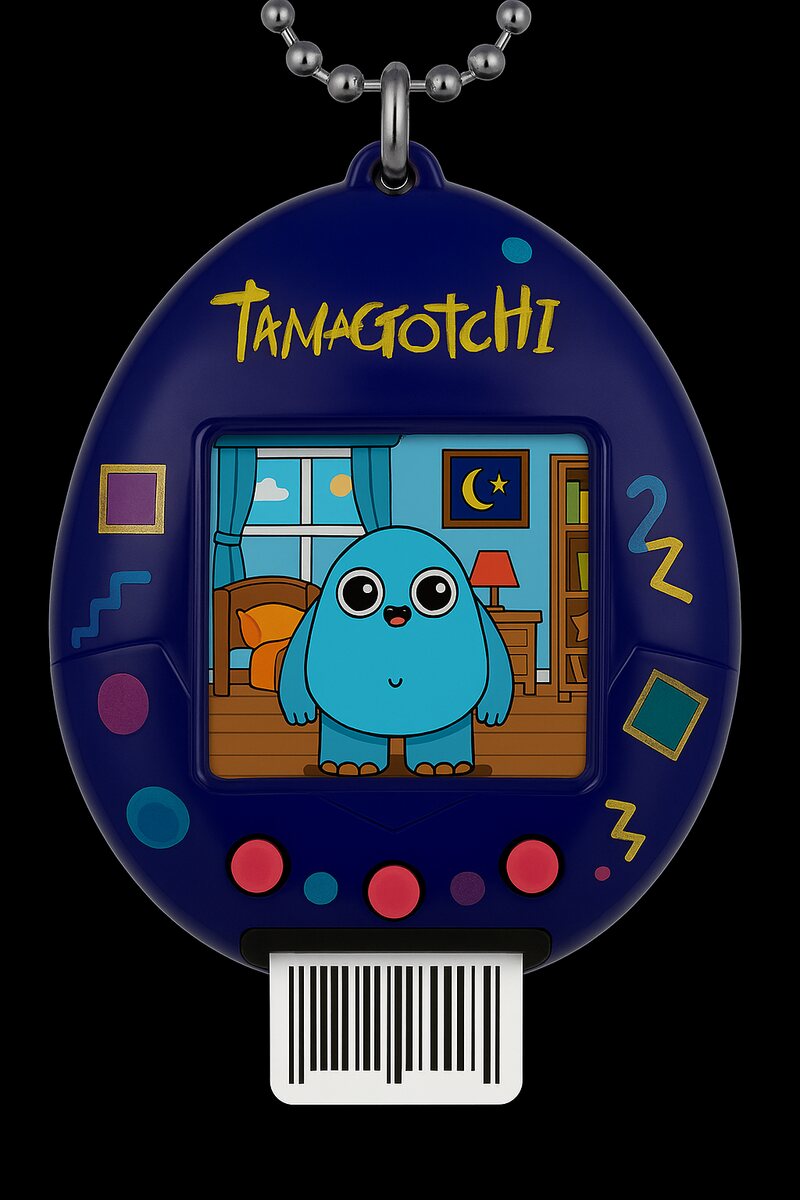
The concept for Sugargotchi emerged as a hybrid of playful engagement and serious health education, aiming to raise awareness of the effects of free sugar on dental health, foster accountability by making children feel responsible for the pet's well-being, and empower parents and educators with an engaging, interactive tool to complement traditional health education.
Behavioural and design foundations
To ground the system in evidence, I explored behavioural change theories and design frameworks to guide development:
- Behavioural economics — emphasising immediate, tangible consequences for choices (feeding Sugargotchi sugary snacks leading to poor health outcomes).
- Persuasive Systems Design — creating a feedback loop where the pet's state dynamically reflected the child's habits, encouraging reflection and adjustment.
- Self-Determination Theory (SDT) — supporting children's autonomy (customisation), competence (understanding the impact of their actions), and relatedness (an emotional bond with the pet).
- Social Learning Theory — reinforcing behaviours through observation and interaction, helping children learn by "caring" for Sugargotchi.
Early stakeholder engagement and key insights
During this phase I consulted public health specialists to understand the broader impact of sugar consumption and existing education gaps, parents and educators to explore which tools could complement efforts in schools and homes, and game designers and interaction specialists to identify the most effective ways to merge emotional engagement with health education.
Key insights
Emotional engagement is key — attachment to a digital pet could drive sustained interest and reinforce learning. Gamification enhances learning — playful interactions and tangible feedback loops are more impactful than traditional materials. Simple, tangible actions drive behaviour — physical interactions like "feeding" the pet with pH strips make abstract health concepts concrete. Broad applicability — Sugargotchi could work in schools, homes, and potentially clinical settings to complement public health campaigns.
2 · Defining requirements
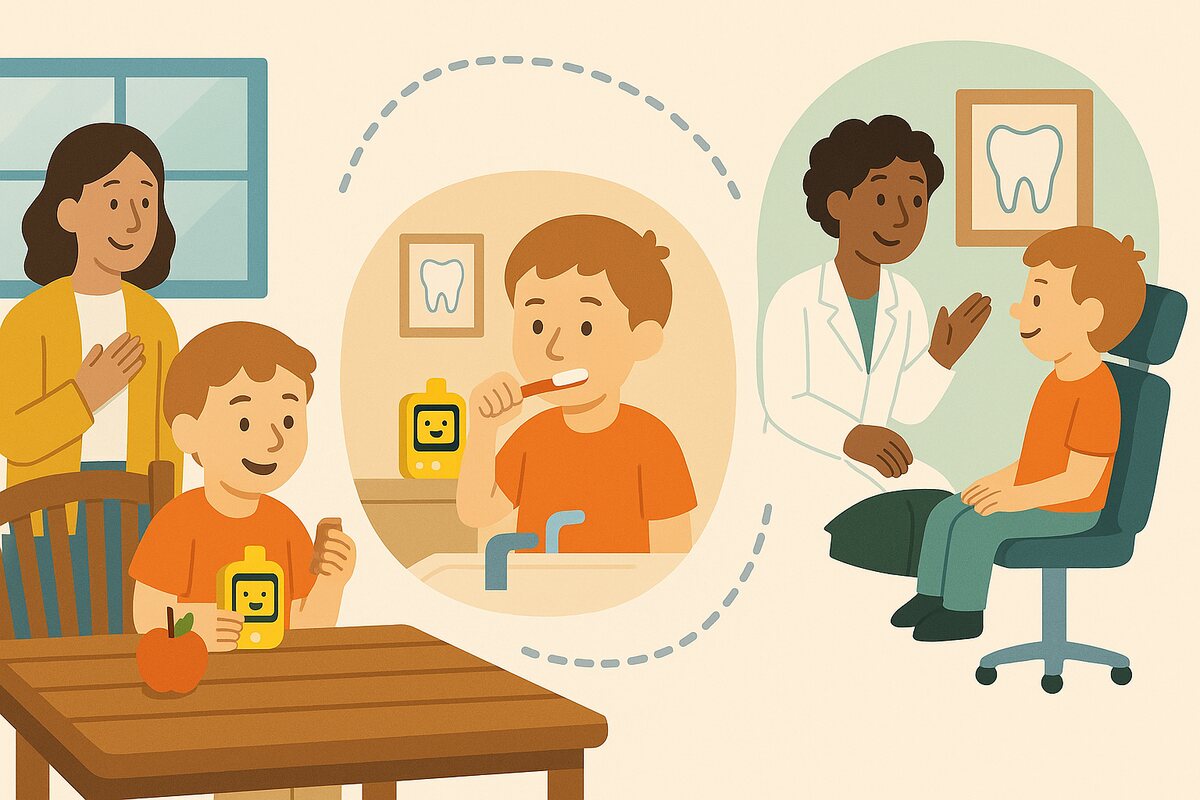
With the broader problem space established, the next phase focused on defining a clear problem statement and user requirements. This involved identifying the key stakeholders — children, parents, and clinicians — and specifying the needs, constraints, and goals that would guide development.
Parents struggle to monitor their children's sugar consumption effectively and need a tool that aligns with busy family routines. Clinicians require a way to reinforce educational messages outside the clinic without adding to their workload. Sugargotchi aimed to address these challenges by creating a playful, emotionally engaging tool that empowers children to learn about sugar and oral hygiene while supporting parents and clinicians in promoting healthier choices.
Stakeholder requirements
Re-engaging with each group surfaced a distinct set of requirements:
- For children — engagement (fun, playful mechanics with dynamic, emotionally resonant feedback), accessibility (intuitive, with simple controls and minimal need for adult supervision), and empowerment (learning to make informed decisions about food and oral hygiene independently).
- For parents — integration into daily life without being intrusive, supportive feedback on their child's habits in a non-judgemental way, and educational value that reinforces positive habits at home.
- For clinicians — accuracy (scientifically sound messaging), scalability (adaptable across schools, homes, and community programmes), and simplicity (no complex setup or maintenance).
Constraints and success criteria
The tool needed to operate within several constraints: cost-effectiveness (affordable to produce and widely accessible), technological feasibility (functional with minimal reliance on phones or internet connections), and age appropriateness (suited to children's cognitive and motor skills for intuitive interaction). Success would be measured by Sugargotchi's ability to sustain engagement over repeated interactions, reinforce key lessons about sugar and oral health, and fit seamlessly into the lives of children, parents, and clinicians.
3 · Prototype ideation
With the problem statement and requirements defined, the ideation phase focused on generating creative, meaningful concepts. While grounded in behavioural science and game design, this phase was also driven by a desire to create something special and standalone — a deliberate break from the oversaturated world of impersonal apps.
An old-school, retro aesthetic
As designers who grew up in the 80s and 90s, we were inspired by retro, physical toys like Tamagotchis and other interactive companions. Our vision was a device that children would value as a special object in their lives, rather than just another app vying for their attention on a crowded smartphone. Key motivations included fostering a parasocial relationship by making the pet tangible and personable, prioritising a standalone embodied experience that stood apart from digital distractions, and leveraging SDT — autonomy, competence, and relatedness — to promote behavioural change. We believed that if children cared deeply about Sugargotchi's health, they might begin to mirror the positive behaviours they practised to help it thrive.
User journey mapping and storyboarding
We began by exploring when and where children might interact with Sugargotchi, alongside the roles of parents and clinicians. Daily snack times, after-meal moments, and bedtime routines offered natural touchpoints for children; meal supervision let parents reinforce healthier choices; and periodic check-ups allowed clinicians to integrate Sugargotchi into broader dietary discussions. To visualise these contexts, we created detailed storyboards depicting interactions such as feeding Sugargotchi a food item and observing its emotional reaction, using it during snack preparation to evaluate sugar content, and celebrating successes as the pet "thrives."
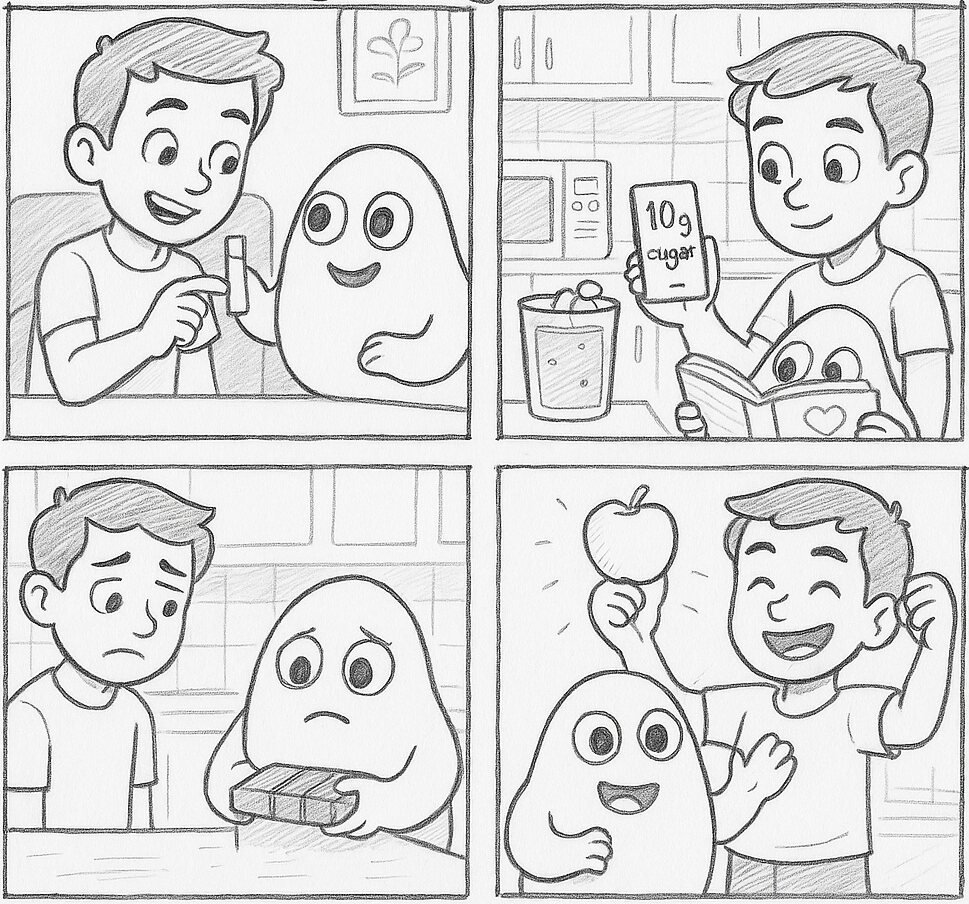
Affinity mapping and mood boards
Brainstorming sessions generated a wide array of ideas, grouped through affinity mapping into key themes: interactivity (feeding, touching, or customising the pet to foster care and responsibility), feedback (dynamic responses tied to real-world behaviours), and standalone design (tangible elements that engage children independently of a smartphone). Iterative sketching focused on playful, animal-like designs with expressive faces and physical movement. Mood boards celebrating retro aesthetics confirmed that animal-like characters with human traits — speaking, moving, showing emotion — would resonate most with children.
Two prototype concepts emerged
At the end of ideation, we decided to explore two distinct design directions in parallel:
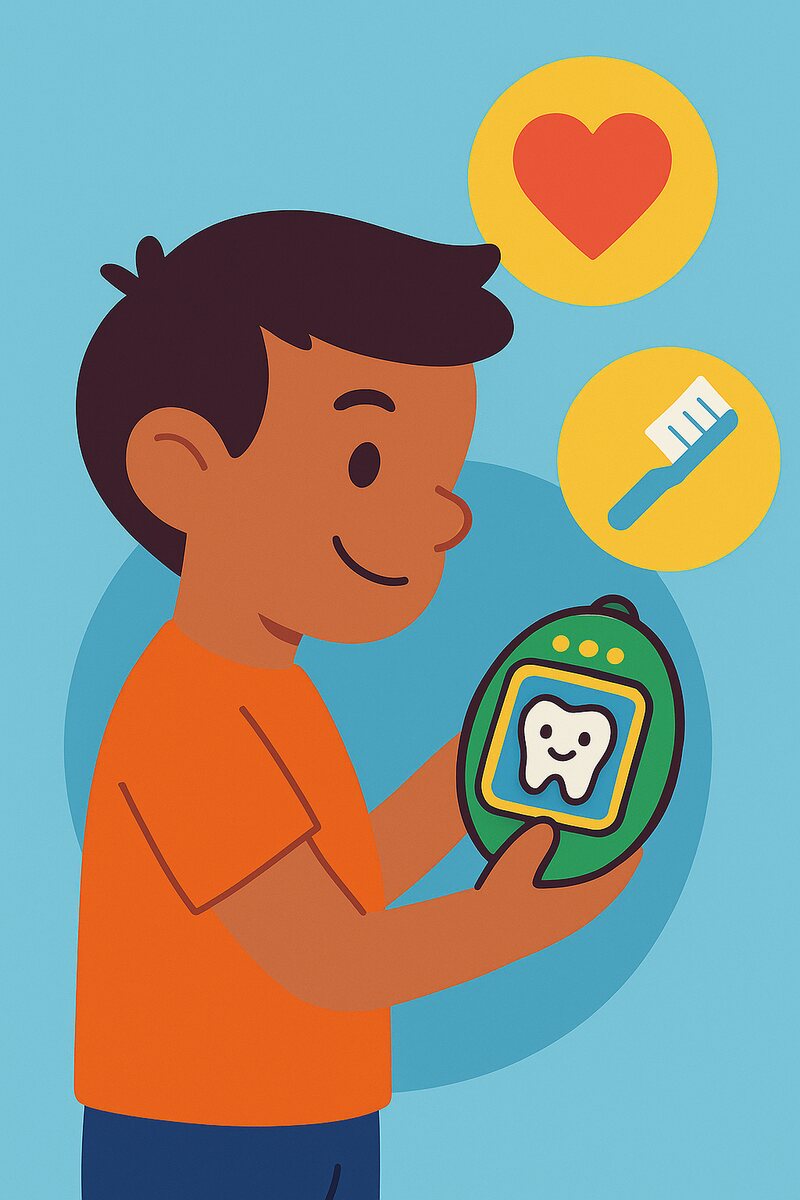
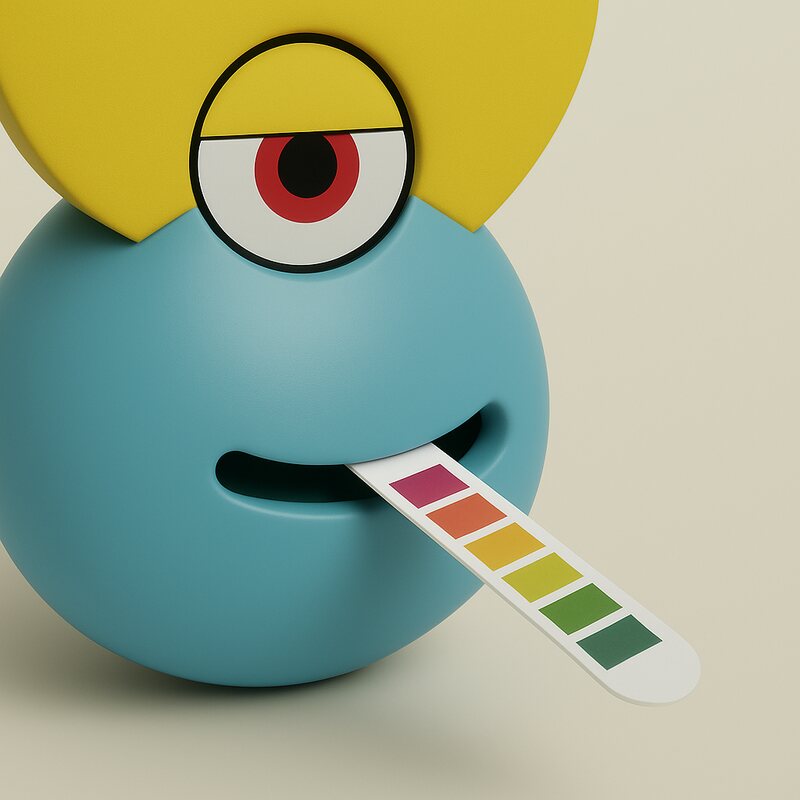
- Barcode Mobile Digital Version — a screen-based digital pet integrating a barcode scanner to assess food sugar content. Scanning packaged foods queried Tesco's API to determine sugar levels; Sugargotchi's health state reflected the scanned item's nutritional profile, with animated feedback on a digital screen. The rationale focused on portability and leveraging existing technology to link real-world food choices to educational feedback.
- Tangible pH Strip Pet Version — a physical digital pet that uses pH test strips to assess saliva acidity, linking the child's diet directly to Sugargotchi's health. Children fed strips into a tangible pet that responded with dynamic physical movement, with emotional states reflecting health outcomes. The rationale focused on a standalone, embodied experience that fostered an emotional bond through physical interaction.
4 · First prototype — the barcode version
The first prototype we built was the Barcode Mobile Digital Version, designed to leverage Tesco's API for nutritional data. This version aimed to provide a simple, portable way for children to scan food items and receive immediate feedback about their sugar content. It combined a Raspberry Pi, a USB barcode scanner, and a digital display into one interactive experience.
- A child scanned a packaged food item with the USB barcode scanner.
- The system queried Tesco's API for nutritional information, focusing on sugar content per serving or per 100 grams.
- Sugargotchi's health state was displayed on screen, reacting dynamically — happy and energetic for low sugar, sad, sluggish, or "sick" for high sugar.
- Text-based feedback helped children and parents understand the implications of a choice (for example, "This snack contains 15g of sugar per serving. Try a healthier option!").
Focus groups and early feedback
To evaluate the concept, I presented the prototype to a small group of parents and educators in early focus groups, gathering qualitative feedback on usability, engagement, and practicality. Parents appreciated the immediate relevance — a direct link between scanning a product and receiving actionable health insight — and the interactive nature of scanning and seeing Sugargotchi's reaction clearly intrigued children. But several challenges surfaced:
- Dependence on internet access — the system required a reliable data connection to query Tesco's API, making it impractical on the go.
- Inconsistent data standards — not all products in the API included sugar content per 100 grams, leading to potential inaccuracies.
- Barcode reliance — many commonly consumed foods, such as homemade snacks or unpackaged items, lacked barcodes, limiting scope.
- Educational concerns — parents worried children might fixate on the scanning process rather than learning to evaluate food choices independently; educators wanted a more intuitive way to teach healthy eating.
Lessons learned
Development also revealed technical limits: the Tesco API's nutritional data varied in format and required preprocessing to standardise; hardware integration between Pi, scanner, and display needed iterative debugging; and reliance on multiple components made the prototype less intuitive and portable than desired. Three lessons carried forward: simplicity is essential (complex dependencies like connectivity and barcodes detract from usability for children), standalone design is preferable (a fully self-contained solution that doesn't depend on external APIs or devices), and emotional engagement matters (the lack of a tangible connection limited the emotional bond compared with embodied prototypes).
5 · Second prototype — the tangible pet
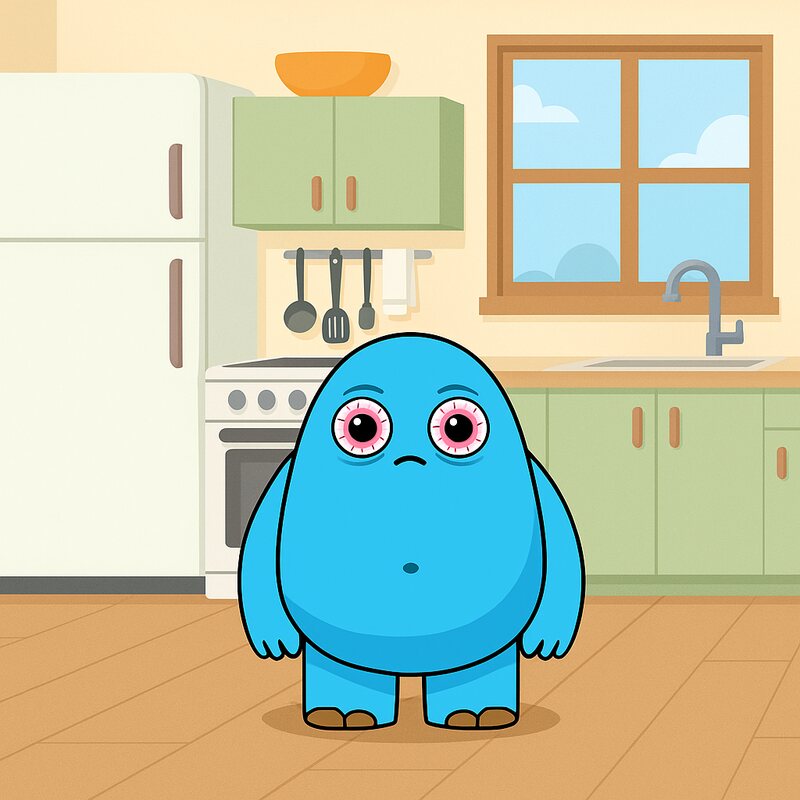
The tangible prototype represented a bold step toward a truly interactive, standalone device that combined emotional engagement with educational functionality. Designed for children aged 5–10, this Sugargotchi aimed to foster responsibility, curiosity, and improved awareness of dental health — and to deliver the embodied, parasocial relationship the barcode version could not.
Technical specifications
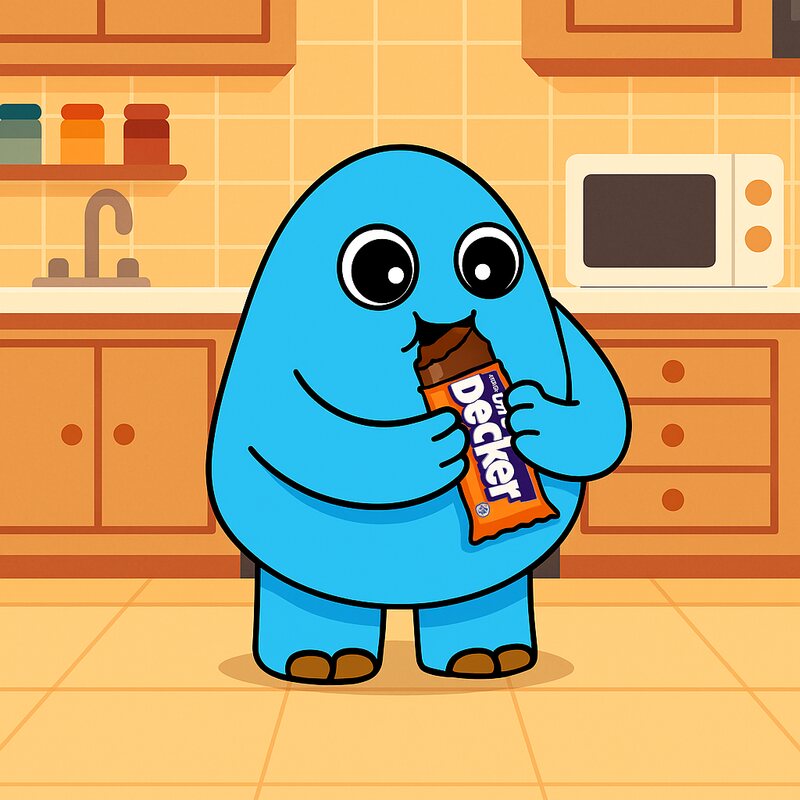
Sugargotchi was crafted to be both visually engaging and functionally robust, balancing form and educational purpose. Measuring 123 × 123 × 155 mm and constructed from 3D-printable PLA filament, it was lightweight and affordable for prototyping. A Raspberry Pi 3B powered the device and handled data processing; a 3.5" TFT screen displayed the pet's facial expressions and health state; a camera captured images of pH strips and activity cards; LED lights illuminated the pet's "mouth" and eyes for visual feedback; mini fans simulated breathing and subtle motion; an accelerometer detected movement for interactivity; and a LiPo battery provided portability and standalone operation. The system was coded in Python, leveraging the OpenCV library for image processing and analysis.
Pet Mode — measuring and mirroring dental health
In Pet Mode, Sugargotchi acted as a companion that measured the child's dental pH and mirrored its findings in its mood and health state.
- Children tested their saliva's pH using litmus strips, which changed colour to reflect acidity levels.
- They fed the strips into Sugargotchi's LED-lit mouth, where the internal camera captured an image of the strip.
- OpenCV analysed the strip's colour, matching pixel values to predefined ranges representing pH levels from 4.0 to 8.0.
- Behavioural feedback followed: pH below 5.5 (acidic) negatively affected the pet's mood — droopy eyes, sluggish movement, and sad sounds — while neutral or slightly alkaline pH (6.5–7.5) brought bright eyes, energetic movement, and cheerful sounds.
Sugargotchi encouraged two primary daily readings — a morning reading before breakfast to measure resting saliva pH, and an evening reading before brushing teeth — with additional optional readings letting children experiment with different foods and beverages, linking their choices to the pet's health. Readings were logged over time, helping children and parents understand patterns in their dental health.
Challenge Mode — teaching about free sugar
In Challenge Mode, Sugargotchi shifted from tracking to teaching, using a card-based game to close the loop between understanding pH, free sugar, and pet health. Players took turns drawing cards and feeding them into Sugargotchi's mouth for analysis by the internal camera, with the game lasting five minutes as players aimed to keep the pet as healthy as possible.
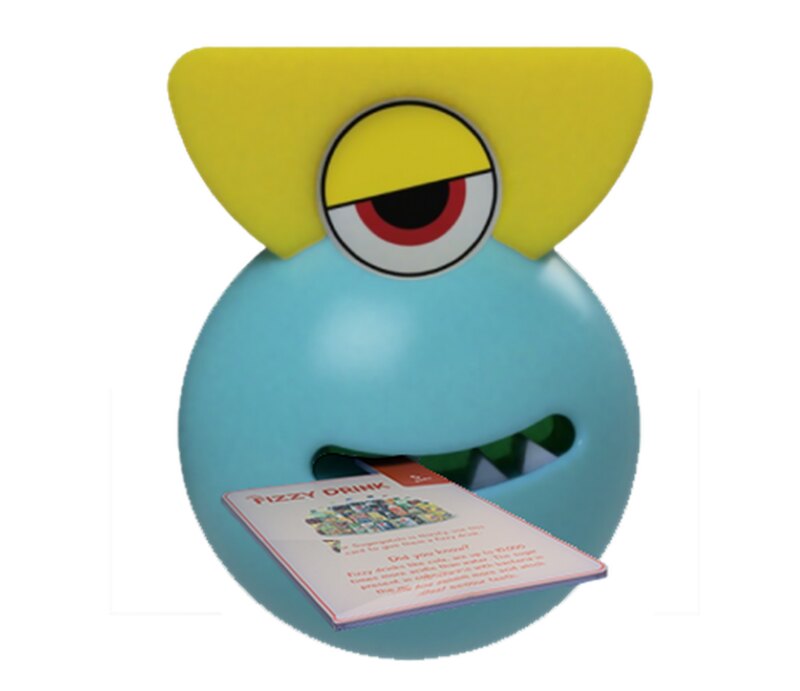
- Snack cards depicted food and drink items with their sugar content and nutritional composition; players chose to feed the card to Sugargotchi or skip it, cycling through the deck to find a healthier option, with coloured edges indicating health points.
- Challenge cards prompted players to perform tasks — such as testing a drink from the fridge and analysing its pH with a strip — encouraging hands-on learning about pH and sugar content.
- Chance cards presented true/false questions about free sugar or dental health; players fed the card in, selecting true or false based on the edge they inserted.
Sugargotchi's health started at 100 points and deteriorated by 3 points every 10 seconds; players gained or lost points based on their choices, with the pet's expressions and sounds reflecting the current score. Successfully completing the game restored Sugargotchi's health in Pet Mode, reinforcing the connection between learning and caring.
Technical challenges and solutions
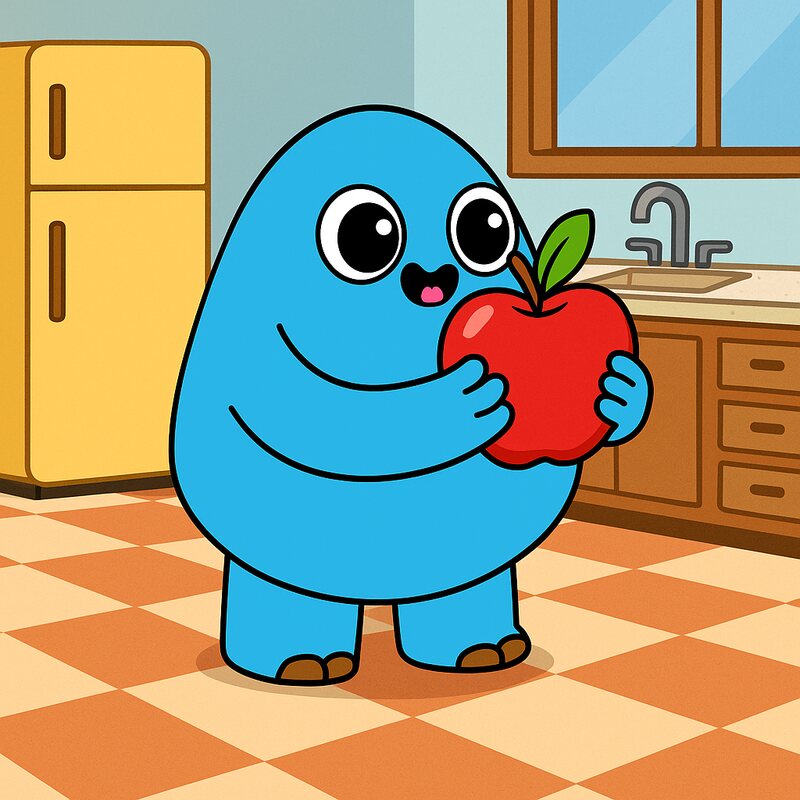
Building Sugargotchi required a blend of low-cost hardware, real-time image processing, and tangible interaction — all within a child-friendly form factor.
- pH strip analysis. pH strips are sensitive to lighting, and ambient light in homes and classrooms proved inconsistent. We embedded a ring of white LEDs inside the mouth cavity, triggered only during analysis to preserve battery, providing controlled, uniform illumination that eliminated shadows and colour casts for reliable classification.
- Image processing and colour detection. Subtle colour shifts on strips — especially in transition zones between pH levels — confused naïve classifiers. Using OpenCV, we implemented a pixel-frequency histogram across the strip's region of interest, identifying the dominant colour cluster and cross-referencing it against a calibrated reference table rather than relying on a single average hue.
- Card recognition. Early prototypes struggled to distinguish cards quickly when alignment varied or hands obstructed the view. We redesigned the cards with bold, colour-coded borders and unique fiducial-like markers in the top corner, letting the camera detect orientation and card type instantly via simple shape detection and colour segmentation — avoiding more complex, costly AR tracking.
- Power and portability. The device had to run a display, camera, LEDs, and scanner without phones or mains power. A compact 3.7V LiPo battery paired with a custom power-management board and charge controller, plus energy-saving logic that turned off the display and lights during idle, achieved multiple hours of active use, with a discreet USB charging port for overnight top-ups.
Reflections
Developing Sugargotchi was an opportunity to explore how emotional design and tangible interaction could make abstract health data meaningful for children. While the system has not yet been tested with children in a live setting, the design process laid strong foundations — blending behavioural theory, low-cost hardware, and playful prototyping into a concept ready for real-world evaluation.
The project stretched my skills across hardware/software integration, computer vision, and narrative-centred UX, all within the constraints of portability, accessibility, and child-appropriateness. I particularly valued the challenge of designing a system that could feel emotionally engaging without over-simplifying or compromising its educational goals. While early stakeholder feedback was encouraging, the critical next step is deployment in partnership with schools or public health settings — testing how children respond to the interaction, the feedback loops, and the long-term experience of "caring" for their pet.
Above all, this project reaffirmed my belief that behaviour change begins with emotional connection — and that with the right balance of play, feedback, and autonomy, children can engage with even the most complex health challenges in ways that are meaningful and sustainable.
Selected publication
Gray, S.I., Metcalfe, T., Cater, K., Bennett, P. & Bevan, C. (2020). The Sugargotchi: An Embodied Digital Pet to Raise Children's Awareness of their Dental Health and Free Sugar Consumption. Extended Abstracts of the 2020 Annual Symposium on Computer-Human Interaction in Play (CHI PLAY), pp. 242–247. https://doi.org/10.1145/3383668.3419874
Keep exploring
More case studies
Gorilla Game Lab
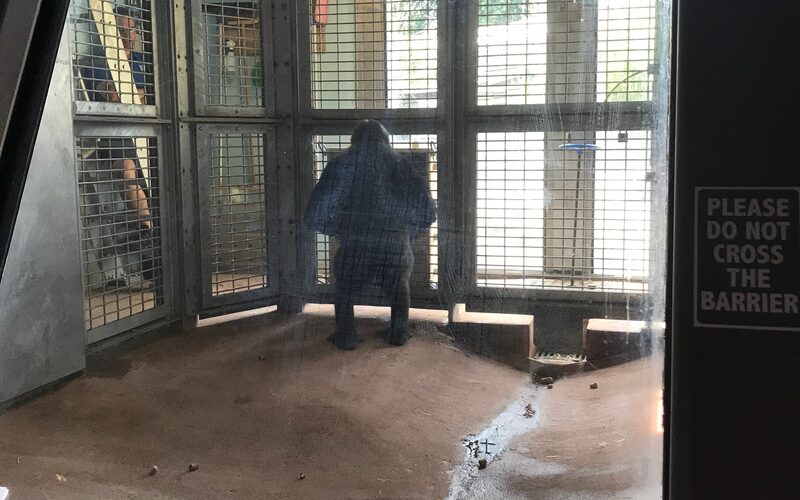
Digital and tangible playable interfaces to improve the welfare of zoo-housed gorillas.
View case study →
SpaceVision
A participatory, child-centred redesign of a game for diagnosing children's eye disease.
View case study →
Critter Jam
A location-aware mobile exergame to promote children's physical activity.
View case study →