Design fiction · VR ethics · Research
VR100
A university–industry knowledge exchange between HCI researchers and immersive theatre practitioners — using participatory design fiction to explore the ethics of virtual reality with young people, and to provoke public reflection through a performance set in 2079.
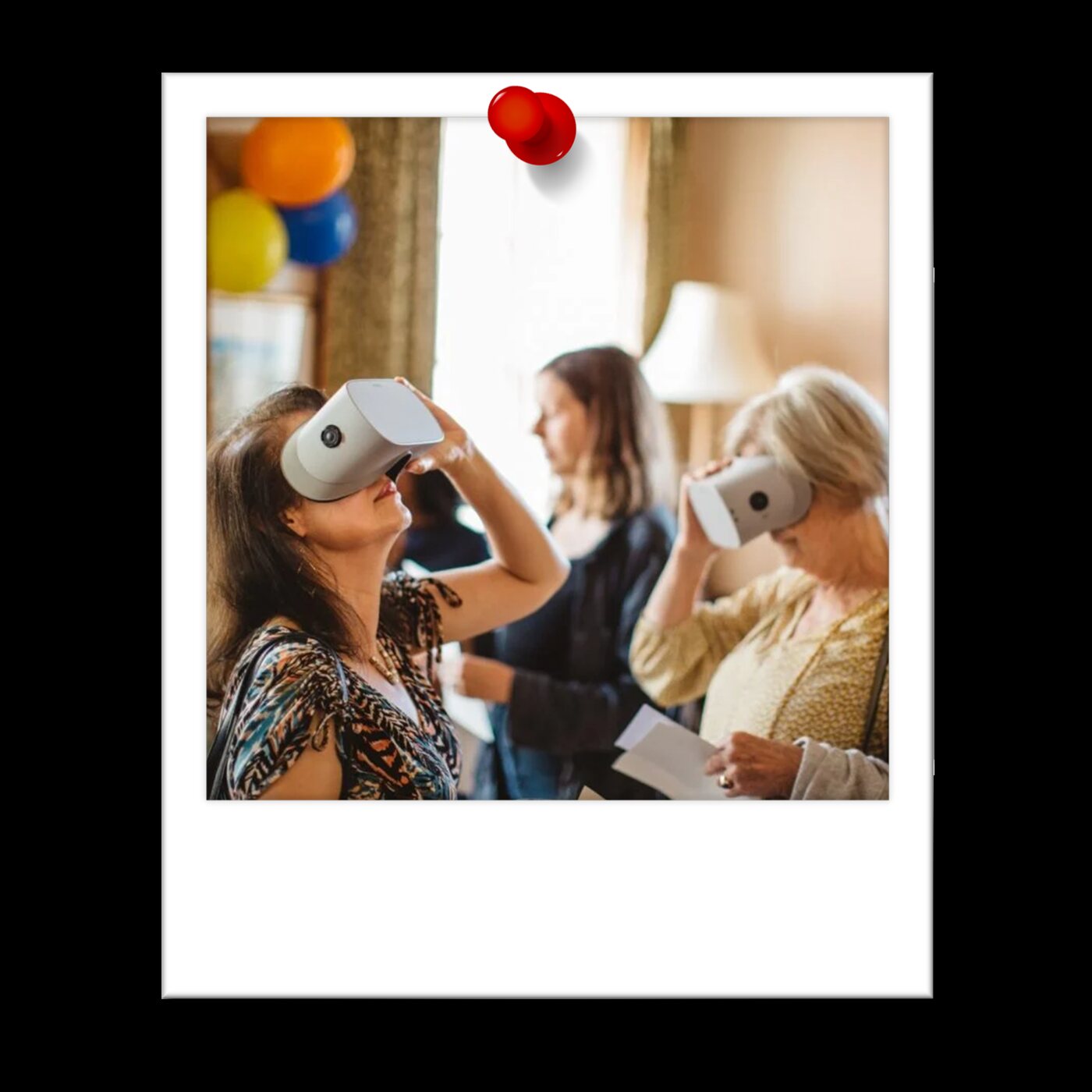
Emerging immersive technologies such as Virtual Reality (VR) offer powerful opportunities for learning, connection, and storytelling — but they also raise complex ethical questions around identity, agency, and the boundaries of reality. Yet conventional academic research methods often struggle to surface these nuanced concerns, especially among the younger users who will inherit the consequences of today's design decisions.
VR100 was a bold collaboration between HCI researchers at the University of Bristol and immersive theatre practitioners at Kilter Theatre. Designed as a university–industry knowledge exchange project, it explored how arts-based methods could be used to engage young people in critical discussion and ideation around the ethical implications of VR. Over the course of a year, the team co-designed and delivered a series of workshops with 13–15-year-old students, blending role-play, speculative design, and first-hand VR experience. Insights from those workshops directly inspired the creation of VR100 — a public immersive theatre performance set in the year 2079, exploring the ethics of resurrecting the dead through virtual reality. Through this unique piece of design fiction, the project bridged research and public engagement, enabling discussion of complex sociotechnical themes in an accessible, emotionally resonant way.
My contribution
As lead researcher on the university side, I directed the research and co-designed the participatory process so that young people's perspectives shaped both the workshop content and the final performance. I initiated and managed the partnership with Kilter Theatre; designed and facilitated speculative design sessions with 13–15-year-olds using role-play, journaling, and VR; supported ethical planning and contributed to the development of the theatre script; helped design and run the immersive theatre event and its audience reflection sessions; and co-authored the peer-reviewed article documenting our methods and outcomes.
Process overview
Our process was rooted in exploring how young people make sense of emerging technologies — especially when those technologies blur the lines between life, memory, and identity. By combining creative workshops, speculative design, and immersive storytelling, we created space for teenagers to reflect on the ethical futures of VR. Working closely with theatre practitioners, we translated these insights into a public-facing performance that challenged audiences to confront the emotional and social consequences of digital resurrection. Throughout, we embraced co-creation, ethical care, and the power of narrative to bridge research and real-world reflection.
1 · Objective setting & partnership building
The project began with the formation of a knowledge exchange partnership between the University of Bristol's Human-Computer Interaction (HCI) research team and the immersive theatre company Kilter. Funded through an EPSRC knowledge exchange secondment, the aim was to explore how arts-based methods could support participatory research into the ethical implications of VR technologies.
From the outset, this was positioned as a bi-directional collaboration — one where both academic and creative industry partners could learn from one another. As the lead researcher on the university side, I was responsible for framing the objectives, initiating early dialogue, and facilitating mutual understanding between disciplines that, while overlapping in participatory practice, differed significantly in structure, culture, and output expectations.
Mutual goals and value exchange
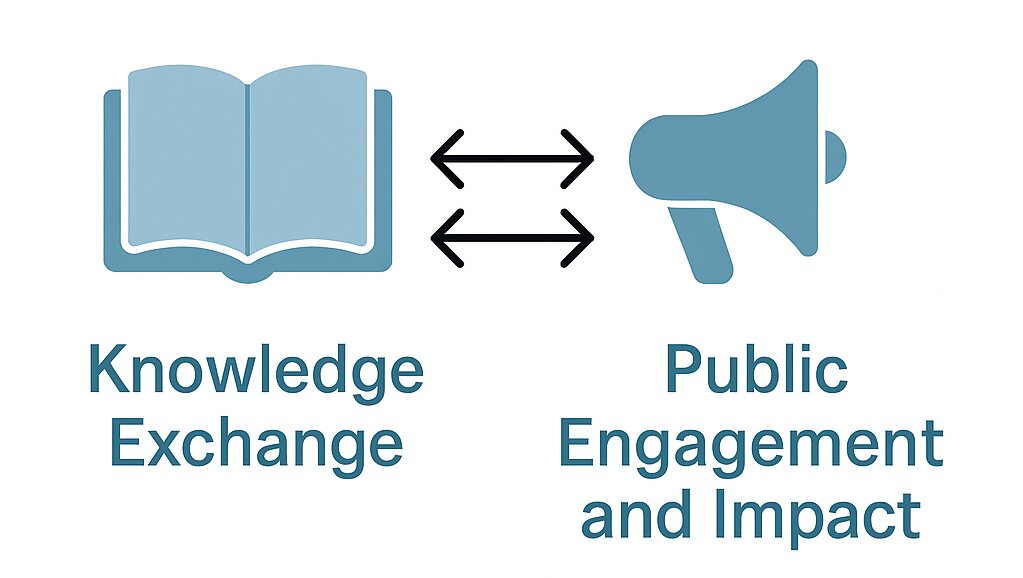
The project's core goals were twofold. The first was knowledge exchange: for the HCI team, to develop new arts-based techniques for ideation, ethics elicitation, and public engagement — particularly with younger audiences; and for Kilter, to gain technical insight into VR technologies and a practical understanding of how universities conduct research in emerging-technology ethics. The second was public engagement and impact: to run a participatory workshop series with young people that would gather speculative and ethical perspectives on future VR use, and then translate that engagement into a public-facing output — an immersive theatre performance — that could provoke broader conversation about VR's societal implications.
At this early stage I also worked with both teams to identify key themes for exploration, such as digital agency, immersive realism, and mortality and memory, drawing on contemporary literature in VR ethics (e.g. Madary & Metzinger, 2016) and participatory HCI methods.
Navigating organisational differences
A major focus of the initiation phase was working through the significant cultural and procedural differences between our organisations. Kilter operated as a small, agile team with flat hierarchies and an improvisational, responsive approach to creative work. The university, in contrast, was governed by complex hierarchies and regulatory processes — especially around ethical review, safeguarding, and data storage. I coordinated bi-weekly knowledge exchange sessions at the university where both teams shared past projects, explored each other's methods, and asked questions openly. During this time:
- Kilter were introduced to VR research projects and tools in our lab.
- We discussed the challenges of ethics approval, the nature of "research data," and the boundaries of co-design in an institutional context.
- We agreed that our methods must meet both research-integrity standards and creative flexibility, requiring compromise on both sides.
This immersive, relational groundwork — though time-consuming — was essential. It ensured a shared foundation of knowledge, respect, and understanding that let us co-develop the project's structure collaboratively in later stages. We also established that co-creation didn't mean abandoning our disciplines, but intentionally blending them to uncover richer insights.
2 · Immersive learning & method development
With the partnership established, the second stage focused on building mutual capability. This involved embedding the teams in each other's domains — technological and theatrical — and beginning to co-develop the methods that would underpin our joint exploration of VR ethics. The goal was not only to share expertise but to lay the methodological foundations for the later workshops and performance.

Immersive learning sessions
Over a three-month period I coordinated and co-facilitated a series of immersive learning sessions, held bi-weekly at the university and designed to familiarise the Kilter creative leads with the technical, social, and ethical landscape of VR. These sessions covered:
- Hands-on VR experiences — practical sessions where Kilter could experience a range of VR systems for the first time. I provided technical walkthroughs, facilitated open play, and guided reflection to help them grasp the experiential and emotional affordances of VR.
- State of the art in VR research — I presented recent projects from our lab and the wider HCI community, including embodiment, presence, and known ethical challenges such as privacy, consent, identity, and addiction. These were grounded in work such as Madary & Metzinger's ethical guidelines but made accessible through examples, demos, and dialogue.
- Embedded knowledge sharing — between sessions we maintained regular communication through email and an online blog authored by Kilter, documenting their learning journey and raising questions. This informal channel helped scaffold their understanding as they assimilated unfamiliar concepts.
Developing the methodological toolkit
In parallel, I worked with both teams to co-develop the participatory methods we would deploy with young people. Drawing on HCI's history of artefact- and performance-based research, we selected and adapted techniques that could align with both academic rigour and dramatic practice:
- Speculative ideation tools — timelines, journals, and design-fiction prompts.
- Role-play frameworks informed by theatrical improvisation.
- Collaborative narrative development as a means of unpacking ethical tensions.
This was a process of co-design in its own right. While I introduced methods such as paper prototyping, design fiction, and participatory ethics elicitation, Kilter brought a sensitivity to participant engagement, atmosphere, and affect — particularly valuable when working with young people on abstract or emotionally complex topics.
Negotiating constraints and assumptions
A key realisation was the need to proactively balance research constraints — ethics approval, data governance — against Kilter's desire for spontaneity and creative freedom. Their comfort with improvisation initially clashed with our need to pre-define activities for ethical review. To resolve this, I proposed a compromise: we framed activities generically in the ethics documents (for example "group speculative tasks" or "collaborative narrative exercises"), allowing flexibility without breaching protocol. I also clarified terms like "research data," ensuring shared understanding about what could and could not be used publicly.
3 · Co-designing & delivering participatory workshops
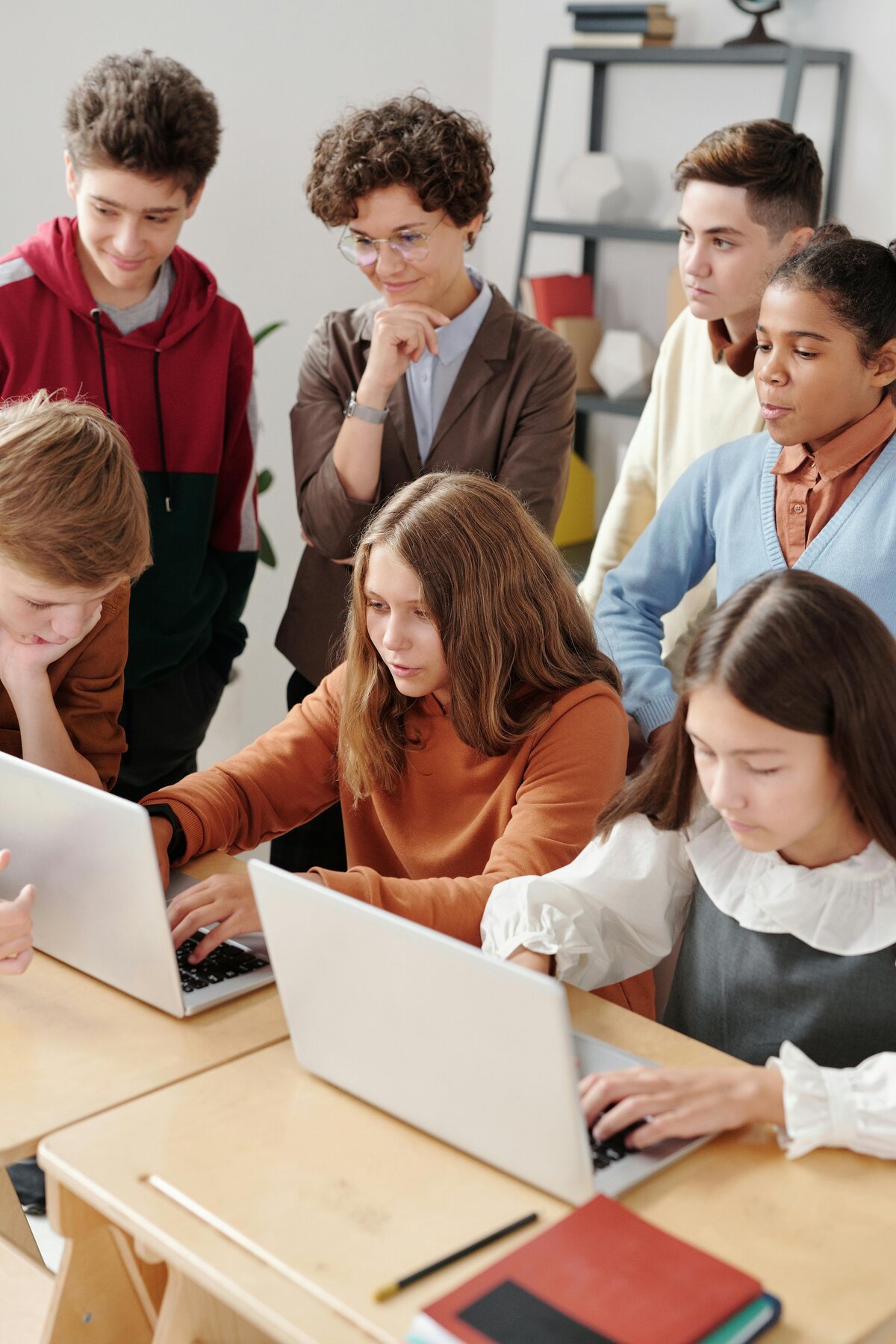
At the core of the project was a three-part participatory workshop series with young people, designed to explore the ethical and social futures of VR. Working with Year 9 and 10 pupils (aged 13–15) at a secondary school in southwest England, we created a space where imagination and critical reflection could coexist — supported by a carefully co-developed set of methods drawn from both HCI and theatre practice. The workshops aimed to empower participants to reflect on future uses of VR, speculate on their potential impacts, and explore the ethical dilemmas that might arise. My role focused on method development, research facilitation, ethical compliance, and capturing the resulting data in a way that was both analytically meaningful and respectful of the participants' contributions.
Over the course of three sessions, we deployed four main methods to achieve these aims.
Round-table discussions
Each session began and ended with the group gathered in a circle — removing spatial hierarchies and signalling that every voice held equal weight. These round-table discussions served multiple purposes: ice-breaking and group bonding; revisiting previous ideas and themes; introducing provocations or contrary views; and encouraging peer-to-peer dialogue. Pupils were invited to share insights from their journals if they felt comfortable, while both the Kilter and UoB teams contributed knowledge, shared experiences with immersive technologies, and gently pushed the discussions toward ethical questioning. This open-ended but facilitated format aligned with constructivist pedagogies — treating knowledge as something co-produced by participants, rather than delivered by experts.
Team and individual role-play
Role-play served as the primary vehicle for future-gazing throughout the workshops, blending speculative ideation with performance. In the final session this culminated in a multi-phase scenario where pupils:
- Formed "VR start-up" teams around interest areas such as law and order, healthcare, the environment, or history.
- Collaborated with researchers to invent a novel VR application that could impact that area of society.
- Presented their concept in-character as tech entrepreneurs during a dramatised "VR Start-Up Convention."
To facilitate this, the Kilter team led a semi-scripted scene: one facilitator played a news anchor in a studio, while the other adopted the persona of a roving reporter "live on location" at the convention, interviewing each pupil team using semi-structured prompts. Pupils rose to the theatrical framing, engaging not only with the reporter but with each other. Observing this dynamic, Kilter extended the activity by holding a "press conference" for the two most popular ideas (as voted by the group), where the rest of the pupils became journalists posing challenging ethical questions. The structure let students explore their ideas in depth and in public, but with the protective framing of a role — they could take creative risks, disagree, and express concerns, knowing the views expressed were attributed to characters, not to themselves.
Introspective journaling
To balance the energetic, performative nature of role-play, each participant was also given a personal journal, used throughout the series to reflect on prompts such as:
This method supported deeper individual engagement — especially for less vocal pupils — allowing participants to explore ideas privately, in their own language, and at their own pace. From a research standpoint, the journals acted as artefacts of design fiction: written expressions of possible futures, valuable both for understanding pupil perspectives and for inspiring content in the final theatre production. Crucially, journaling also served a workshop-design function, de-escalating the emotional intensity of group work and providing quiet time for individual thought between higher-energy tasks.
Temporal mapping — the "washing line" method
In the first workshop we used a physical timeline activity to help pupils situate their predictions for the future of VR. Kilter introduced speculative future scenarios written in collaboration with our research team (for example, "You can upload your brain to a VR cloud"). Pupils added their own predictions on sticky notes, pinned each prediction to a long string running the width of the classroom labelled with future years (2025–2100), and physically moved to the year where they believed each event might occur. This visual, embodied method enabled pupils to express beliefs about technological progress non-verbally, debate plausibility, and spot areas of disagreement or consensus. It gave both teams a snapshot of their speculative imagination — and Kilter used it to identify which time periods felt most "believable" for shaping the eventual theatre script.
What the four methods achieved together
Across the series, pupils acted as co-creators and critics of future technologies; arts-based practice enhanced ethical reflection; and research insights and creative content were generated simultaneously. This blended approach let the research team collect ethically-informed qualitative data while giving the creative team a narrative springboard for their script.
4 · Translating workshop insights into immersive theatre
After the workshop series, the next phase focused on synthesising the rich material produced by the pupils — ideas, ethical dilemmas, narratives, and visions of the future — into a compelling piece of immersive theatre. This represented the culmination of our knowledge exchange goals: transforming co-produced insights into a public-facing format that could spark broader engagement with the ethics of VR. As a researcher, my role was to help identify which themes carried the most ethical weight and resonance, ensure the fictional narrative remained grounded in real-world technological trajectories, and act as a critical friend during creative development.
Establishing creative direction: selecting core themes
Following the final workshop, both teams met to review the outputs — journals, role-play transcripts, group discussions, and the "press conference" debates. Rather than conducting a formal thematic analysis, we used a rapid, team-based synthesis: each member identified the themes they saw as most salient, and we looked for overlap. Three major themes emerged repeatedly:
- Digital companionship and substitution — the idea that future VR systems might replace or augment human relationships, raising concerns about loneliness, emotional authenticity, and psychological dependence.
- Mortality, memory, and the simulation of the deceased — inspired by the pupils' "BucketList VR" concept, where terminally ill individuals could use VR to extend their lives or revisit desired experiences. This raised complex questions about the boundary between life and simulation, and the implications for grief and closure.
- VR as access to otherwise inaccessible experiences — pupils were enthusiastic about VR transcending physical, social, or financial limitations (travel, education, connection), but this also triggered questions around escapism and inequality.
We agreed these themes would form the backbone of the production. The target setting — suggested by the pupils through the temporal mapping exercise — was the year 2079, a date that emerged as a plausible near-future for the imagined technologies.

Writing the script: a diegetic prototype through theatre
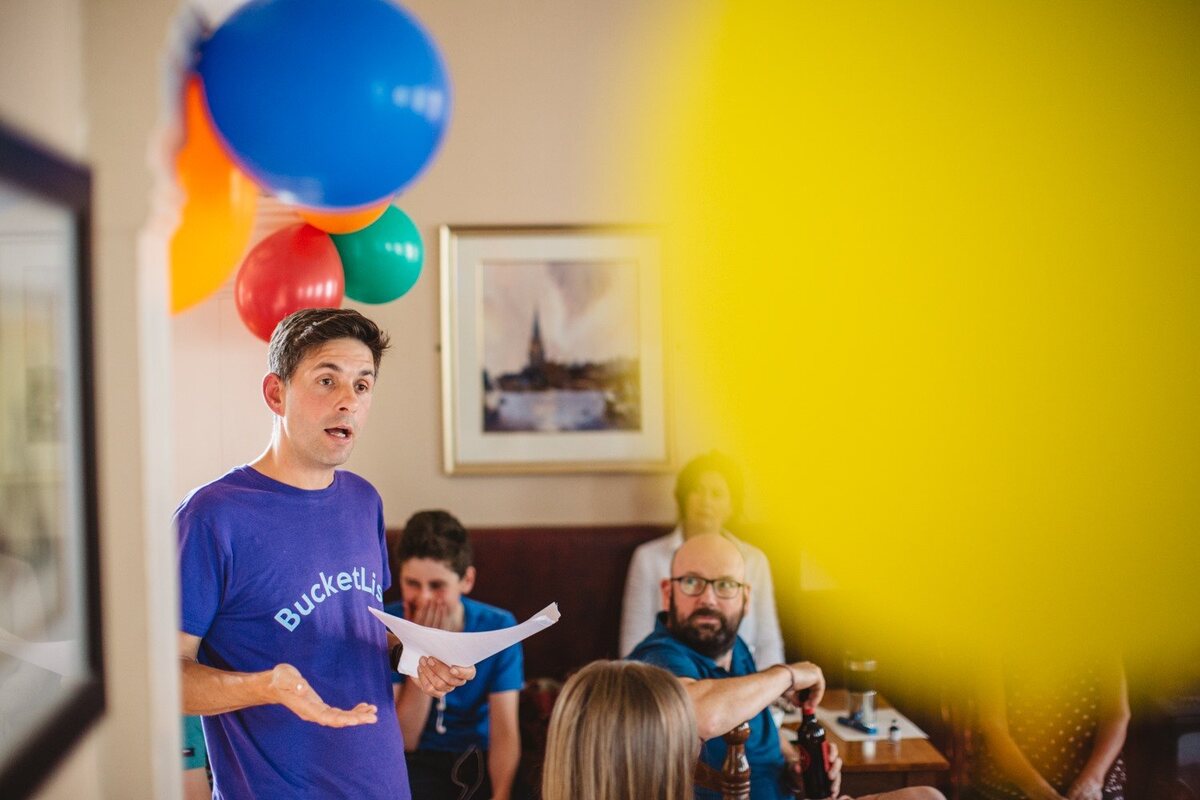
Kilter took primary responsibility for scripting the piece, using the techniques of design fiction to build a fictional but believable future scenario. The performance — titled VR100 — was shaped as a live, immersive theatre experience. The core narrative centred on a woman celebrating what appeared to be her grandfather's 100th birthday. As the story unfolds, it is revealed that the grandfather has already passed away and now exists only as a virtual recreation, via the services of a fictional tech company, BucketList VR. Key scenes were designed to dramatise the ethical tensions raised during the workshops:
- A debate between the granddaughter and the CEO of BucketList over whether her grandfather's recreation is "authentic" or manipulative.
- A revelation that the virtual grandfather's personality was partially reconstructed using data from third parties — posing questions about consent and ownership of digital identity.
- An invitation to the audience to "visit" the grandfather, blurring the line between observer and participant.
The script was shared with the research team for critical review. I provided feedback on the technological plausibility of the depicted system, suggested refinements to the ethical framing, and ensured the performance stayed aligned with the values and contributions of the workshop participants.
Staging and design: embedding the audience
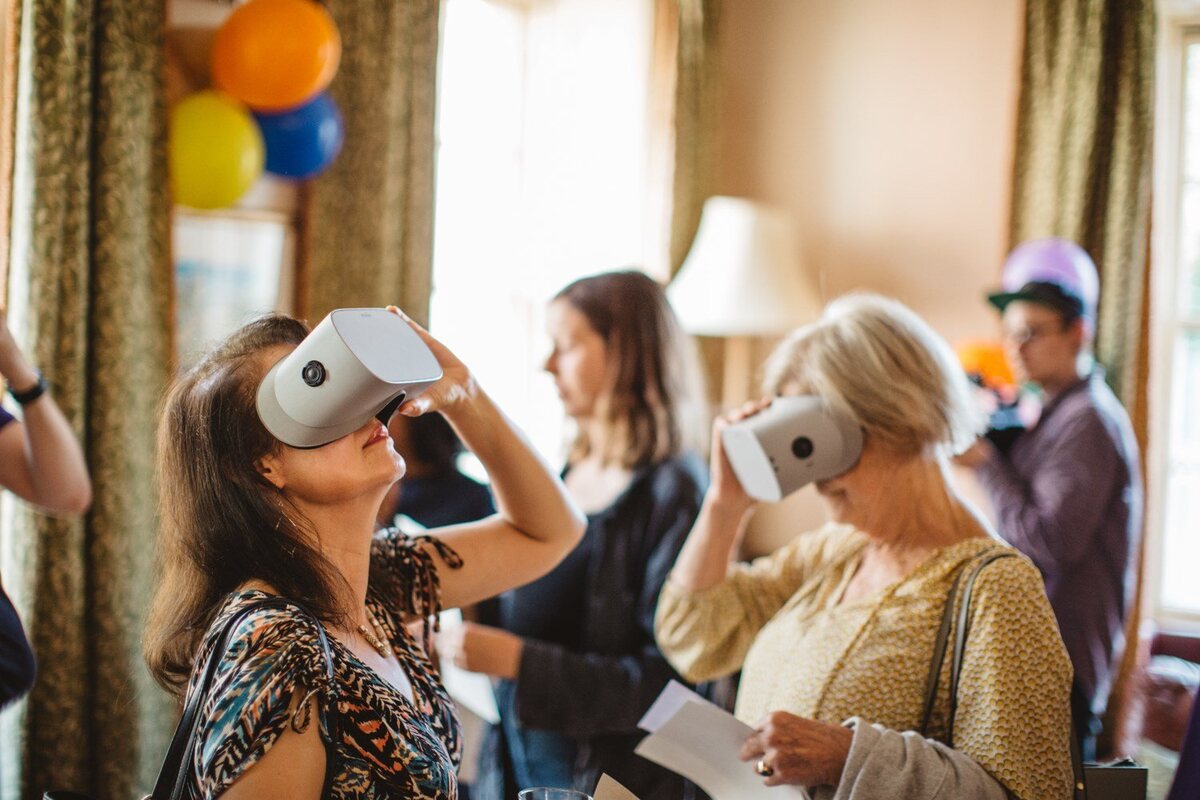
VR100 was staged as an immersive birthday party, hosted in the function room of a Bristol pub. Audience members arrived as "guests" and were greeted in character by the performers — disguising the fictional nature of the event and creating a light-hearted, communal atmosphere. The use of food, drink, decorations, and party hats grounded everything in the familiar, heightening the impact of the later emotional and ethical revelations. Importantly, the format acted as a diegetic prototype: rather than demonstrating a working VR system, the performance placed the audience inside a world where such a system already existed and was socially normalised. It was not a demonstration of technology, but a lived social context through which the implications of that technology could be explored.
Audience recruitment and ethical framing
To attract a diverse audience, we circulated a deliberately ambiguous invitation, framing the event as "a short performance piece that we hope will provoke interesting conversation around the ethics of immersive technology." It made no reference to death or VR simulations, preserving the narrative twist and maintaining emotional impact. Attendees included members of the public, parents, academics, and several pupils from the original workshop cohort. No data was collected during the performance itself, though participants were informed that their post-show contributions during the Q&A would help inform ongoing research.
5 · Public engagement & ethical reflection through performance
With VR100 written, rehearsed, and staged, the fifth stage focused on delivering the piece to an audience and using it as a vehicle for ethical engagement. While the earlier phases had centred on collaboration, co-design, and content development, this stage was about impact: testing how speculative performance could provoke real-time, real-world reflection on the ethical implications of immersive technologies. My role here was twofold — to help facilitate and observe the public engagement, and to critically assess how well the design fiction surfaced the kinds of issues that traditional HCI methods might struggle to draw out from general audiences.
The event: performing VR100
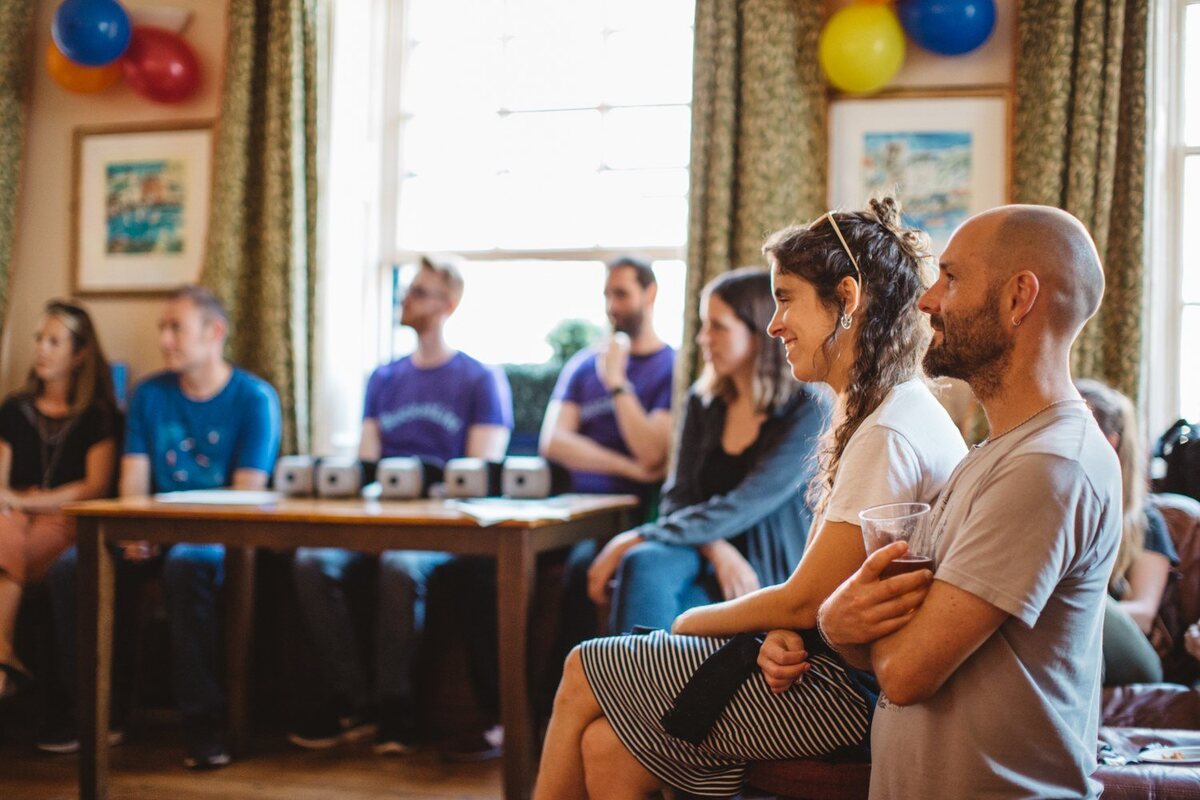
The live performance was held in the function room of a local public house — informal, public-facing, and detached from any institutional setting. We wanted a wide audience: not just theatre-goers or tech enthusiasts, but anyone interested in the future of society and technology. The space was staged as a 100th birthday party; on arrival, audience members were met in character by the cast (playing the granddaughter and the BucketList VR CEO), offered party hats, drinks, and snacks, and welcomed as guests. This blending of fiction and reality was designed to lower defences and make audience members feel personally invested in the story to come.
Over the 25-minute piece, the audience were taken through the central conceit: that the grandfather being celebrated was no longer alive, but had been digitally recreated in VR using personal data, social media profiles, and crowdsourced memories. As the granddaughter interacts with the CEO, their seemingly warm relationship gives way to tension — first over the accuracy of the grandfather's personality, then over a revelation about his past. Eventually, the granddaughter demands the simulation be shut down, and the story ends abruptly.

Post-show discussion: ethical themes and reactions
Immediately after the performance, the audience were invited into a facilitated Q&A — not to evaluate the play, but to open up ethical reflection. Several key concerns emerged:
- Digital afterlife — who owns the right to recreate a person? Should consent be required, and from whom? What happens if loved ones disagree about how the simulation behaves?
- Data and consent — the revelation that the simulation was built from crowd-sourced memories disturbed many attendees. A composite personality built from fragments, some accurate and some imagined, surfaced anxieties about identity, control, and exploitation.
- Therapeutic or harmful? — some empathised with the granddaughter's grief, but questioned whether interacting with a virtual version of a deceased relative would help or hinder mourning. Might it prolong attachment, or offer closure?
- Societal impact of escapism — if people prefer virtual relationships to real ones, what happens to social structures, responsibility, and the value of physical presence?
Notably, the discussion moved well beyond VR itself to adjacent issues: AI, digital rights, memory manipulation, and broader speculative futures such as immortality via simulation, virtual incarceration, and VR-assisted euthanasia. Several participants referenced Black Mirror and similar dystopian fiction, underscoring how easily speculative performance can unlock emotional and philosophical engagement.
Critical observations — strengths and limitations
From a research perspective, VR100 offered clear evidence that immersive theatre can surface ethical reflection in ways that workshops, surveys, or interviews may not: it placed participants inside a plausible near-future, prompting visceral, personal reactions; it let the audience empathise with fictional stakeholders, seeing the issue from multiple human angles; and it bridged the speculative and the plausible through dramatic storytelling. The method had limits, however. The emotional resonance of grief and family risked overshadowing subtler questions of data ethics or technological infrastructure, and the performative "twist" may have biased the conversation toward dystopian interpretations — BucketList VR, inspired by the pupils' optimistic ideas, became a site of moral suspicion on stage. Even so, the format provoked dialogue that extended well beyond our original scope, leaving audiences not just entertained but reflective.
6 · Reflecting on impact, lessons, and future directions
The final stage was a period of reflection — across our university team, our collaborators at Kilter, and with some of the pupils and audience members who took part. This was not a traditional summative evaluation; rather, we explored the impact, insights, and tensions that emerged through multiple lenses: academic, creative, educational, and ethical.
Methodological impact — expanding HCI practice
Embedding theatre practitioners in the research process expanded our methodological repertoire. Role-play and performative framing lowered the barrier to ethical speculation — particularly for younger participants — and we gained confidence deploying arts-based methods like temporal mapping and in-character storytelling to move pupils beyond surface-level ideas. Crucially, arts-led methods proved to be not just "engagement tools" but powerful ideation and inquiry techniques, especially suited to technologies whose social implications are ambiguous or emergent.
Organisational learning — collaborating across cultures
The collaboration was productive but not frictionless. The university required rigorous planning, documentation, and formal ethical compliance, while Kilter thrived on spontaneity and flexible interpretation — a tension most visible during workshop planning, where Kilter's improvisational instincts sometimes clashed with the constraints of ethical approval and research fidelity. Three lessons stood out for future cross-sector work:
- Immerse early — knowledge exchange takes time; more pre-project immersion in each other's working culture would have built mutual understanding faster.
- Co-own ethical design — involving Kilter more directly in shaping the ethical protocol could have built shared ownership over the workshop structure and increased flexibility.
- Anticipate asymmetry — collaboration was not always equal in every phase, and that was acceptable; sometimes our team led (VR training, safeguarding), and sometimes Kilter's expertise dominated (facilitation, performance).
Creative outcomes — from participant input to fictional world
The storyline and ethical dilemmas portrayed on stage were not imposed from above but directly inspired by the young people's own ideas — particularly their concept of "BucketList VR." While Kilter retained creative control, we kept the translation from workshop to script grounded in plausible technological trajectories, ethically complex but emotionally intelligible narratives, and a balance between dramatic impact and fidelity to the participants' contributions. This collaborative process preserved the integrity of participant voices within the final public artefact — something not always achieved in traditional participatory-design outputs.
Public impact — raising ethical awareness
The immersive performance reached a broader audience than HCI research usually does, its emotional accessibility drawing in people who might never engage with speculative-technology debates. But the audience discussion also highlighted a key challenge: how to guide critical reflection without overwhelming it with dystopia. The dramatic twist triggered powerful reactions, yet sometimes diverted the conversation away from the more balanced, constructive visions the pupils had imagined — prompting deeper thought on how design fiction and theatre might be crafted not just to provoke, but to hold space for ethical ambivalence, where no answer is clear-cut and multiple futures remain possible.
Conclusion
This final stage affirmed the value of the entire project — not just as a research success or a creative experiment, but as a proof of concept for meaningful university–creative-industry collaboration. On a personal level, the project deeply influenced my own research trajectory: it expanded my understanding of how speculative and emotional engagement can be integrated into HCI research, and how young people — so often left out of ethical tech debates — can contribute insights that are not just valid but vital. Through mutual exchange, shared creativity, and ethical inquiry, we co-created a public-facing, emotionally resonant exploration of the futures we might one day live in, and the technologies we must learn to live with.
Publication & credits
Gray, S., Bevan, C., Cater, K., Gildersleve, J., Garland, C. & Langdon, O. (2021). Developing arts-based methods for exploring virtual reality technologies: A university–industry case study. Research for All, 5(2), 246–70. https://doi.org/10.14324/RFA.05.2.05
Videography — Kilter Theatre and Suited and Booted Studios. Photography — Ben Pryor Photography.
Keep exploring
More case studies
ZooDesign
A novel design method to facilitate children's education at zoos.
View case study →
Connecting Through Culture
Co-designing digital products to support healthy ageing.
View case study →
BrainQuest
A mobile exergame to promote children's cognitive and emotional regulation.
View case study →